Ranked choice voting in New York City's 2025 primaries: an in-depth analysis
Read the full report below, or download a PDF version here.
Executive summary
In June 2025, New York City voters used ranked choice voting (RCV) in their primary elections for the third time. Voters had the opportunity to rank candidates for office in 38 contests across the city, including the competitive Democratic mayoral primary. National media outlets and leaders took note of how RCV shaped the mayoral race.
In this report, we address whether RCV delivered its intended benefits, including delivering majority winners without a costly runoff election, better reflecting voter desires, and making campaigns more civil. FairVote used both qualitative data — largely press and campaign materials — and quantitative ballot and survey data to draft this report.
We conclude the following:
- Ranked choice voting delivered majority winners without costly runoffs, with additional indicators capturing the winners’ high level of voter support. An average of 74% of voters ranked winning candidates in their top three choices. The primaries saw the highest turnout since 1989.
- Ranked choice voting resulted in more representative outcomes that better reflected the will of voters. In contests that went to an RCV count, a total of 243,808 voters ranked a non-frontrunner first but had their vote count for one of the finalist candidates because of RCV — capturing exactly how RCV allows voters to express their true preferences without fear of wasting their vote. This included 159,619 voters in the Democratic mayoral primary, where 95% of voters expressed a preference between the top two candidates.
- Voters embraced ranking, with 78% ranking at least two candidates in the Democratic mayoral primary, and 76% saying they would like to keep RCV or expand it to more elections.
- Ranked choice voting improved campaign civility and collaboration, with several candidates “cross-endorsing” one another and local organizations providing ranked endorsements. There is also compelling quantitative evidence that voters followed this guidance at the ballot box, which we discuss in detail later in the report.
Introduction and background
The 2025 New York City primary elections represent the largest use to date of ranked choice voting in a citywide election in the United States.
In 2019, a New York City charter commission voted 12-0 to place a charter amendment on that year’s ballot that would establish RCV for all primary and special elections, among other reforms. Following a campaign led by Common Cause New York, the amendment won handily, with 73% of New York City voters in favor.
One of the main arguments made in favor of RCV was that it could replace expensive, low-turnout runoff elections in citywide primaries and deliver majority winners in crowded City Council races. One particularly notorious example of a wasteful runoff had happened just a few years earlier: The 2013 Public Advocate Democratic primary runoff cost $13 million — more than five times the office’s annual budget of $2.3 million — yet drew only 7% voter turnout.
Six years after its adoption, RCV has delivered more than just cost efficiency. It has helped deliver more diverse fields of candidates, improve the quality of campaigns, and boost civic engagement across the city.
In their first election with RCV in 2021, New Yorkers elected their most diverse city government ever, including their first majority-female City Council. Turnout was the highest in 30 years. Several candidates — particularly in City Council races — cross-endorsed each other, and candidates and community organizations alike encouraged voters to rank backup choices. Voters reported that they understood, liked, and engaged with the new system. In the high-profile Democratic mayoral primary, 85% of voters expressed a preference between the top two candidates.
RCV was next used in 2023 – a quieter cycle due to the lack of citywide and borough-wide races, as well as a large number of incumbents running for reelection to the Council in uncompetitive races. Election administration was uneventful and voter education ran smoothly, with voters continuing to take advantage of the opportunity to rank candidates.
2025 was New York’s third election using RCV, with the Democratic mayoral primary again attracting a competitive field and national media attention. Overall, familiar themes emerged. Voters said they liked RCV, and they turned out in historically high numbers. Almost all of them weighed in between the finalists in the mayoral primary. Candidates worked collaboratively, and sometimes cross-endorsed. Women continue to hold a majority of seats on the Council.
Three election cycles in, the evidence points to RCV delivering consistent, lasting benefits for both voters and candidates.
How voters engaged with ranked choice voting
Voter impact on outcomes
Of 38 total primaries across the city this June, 20 included three or more candidates. Of these 20 contests, 14 required an RCV tabulation to identify a majority winner. Two of these 14 — the Democratic primaries for mayor and comptroller — were citywide contests.
Voters had a high impact on the outcomes of these RCV primaries. Across all contested primaries, an average of 74% of voters ranked the winning candidate in their top three choices.
Across contests that went to an RCV count, the average increase in votes that counted for a finalist candidate was 26% — representing 243,808 votes in total that were initially cast for a non-frontrunner, but ultimately counted toward one of the top two candidates. That included 159,619 voters in the Democratic primary for mayor — the race with the highest participation.
In other words, RCV allowed these voters to fully express their preferences — picking their favorite candidate while also weighing in between the strongest candidates in the field.
Voter support for RCV
New Yorkers once again reported that they like and understand RCV. A post-election survey conducted by SurveyUSA found that:
- 96% of New York City voters say their ballot was simple to complete, including at least 94% of each racial group surveyed.
- 81% say they understand RCV extremely or very well.
- 76% say they want to keep or expand RCV.
- 82% say they ranked at least two candidates in the Democratic mayoral primary, and 45% say they ranked five – the maximum allowed.
- According to ballot data, 78% of voters actually ranked at least two candidates, and 48% ranked five, showing the validity of the poll.
- Among voters who ranked two or more candidates, 58% say “ranking allowed me to vote for candidates who aligned with my values.” Among voters who ranked only one, 87% say “that was the only candidate I liked.”
These numbers are consistent with those from a 2021 exit survey, showing that voter support for, and understanding of, RCV has remained strong across cycles.
Figure 1: New York City polling 2021 v. 2025
Voter turnout
For the first time since 1989, more than one million New Yorkers cast votes in the city’s Democratic primary for mayor. Moreover, a New York Times analysis tracked a major increase in new voters this cycle, and found that the largest groups of voters in the mayoral election were ages 25-29 and 30-34 — a departure from nationwide and previous New York City voting patterns, as older voters tend to be most likely to turn out.
While many factors impact voter turnout, this year’s turnout corroborates other research that elections using RCV see higher turnout, and that RCV may have the strongest positive impact on youth turnout.
Still, older voters participated in the primary at relatively high rates. In the mayoral primary, the turnout rate among voters 65+ (34.3%) was similar to the overall turnout rate (34.6%), and voters across age groups reported ranking multiple candidates at similar rates.
Figure 2: New York City voter turnout over time
While the number of registered voters in New York City has risen sharply over recent decades, the population eligible to vote in primaries has been relatively constant. For this reason, using the raw number of primary voters each year allows for a fair comparison over time.
Ranking use by demographics
The New York City Board of Elections follows best practices by releasing cast vote records (CVRs) to the public. These are anonymized digital records of each ballot, and — particularly in RCV elections — they provide detailed information about voters’ behavior and preferences.
To better understand voter behavior, we used New York City’s CVRs to examine how voters ranked candidates by New York Assembly district, combined with demographic data on the voters in each district. We focused on the three Democratic citywide primaries because they offered a large sample of voters and featured at least three candidates in each race, creating meaningful opportunities to analyze ranking usage across different groups.
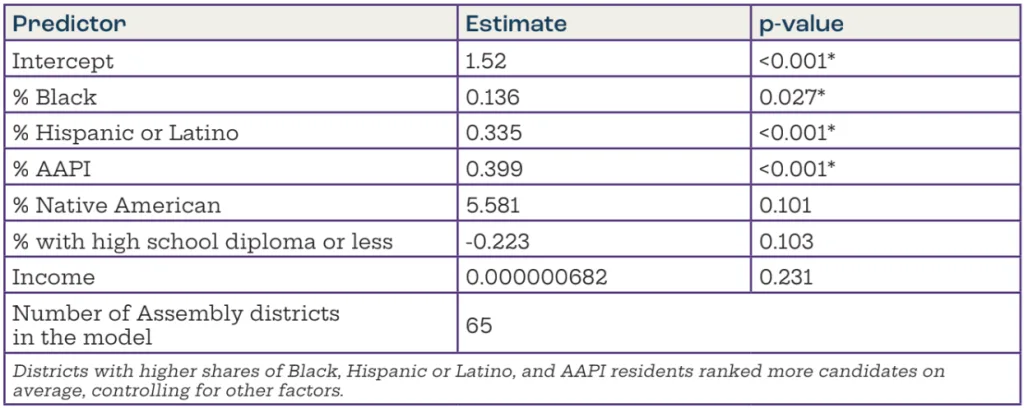
We used Assembly district-level (rather than precinct-level) data in order to add income and education as variables. For each district, we determined the average number of candidates that voters ranked, alongside demographic characteristics like race, education, and income. By analyzing all of these factors together, the model controls for each variable, meaning it estimates the relationship between each demographic characteristic and ranking behavior while holding the other factors constant.
We found that in the mayoral primary, Assembly districts with higher shares of Hispanic or Latino residents ranked more candidates on average. In the Public Advocate and Comptroller primaries, districts with higher shares of Black, Hispanic or Latino, and Asian American and Pacific Islander (AAPI) residents ranked more candidates on average.
Figure 3: Coefficient-level estimates for number of rankings used: Democratic mayoral primary
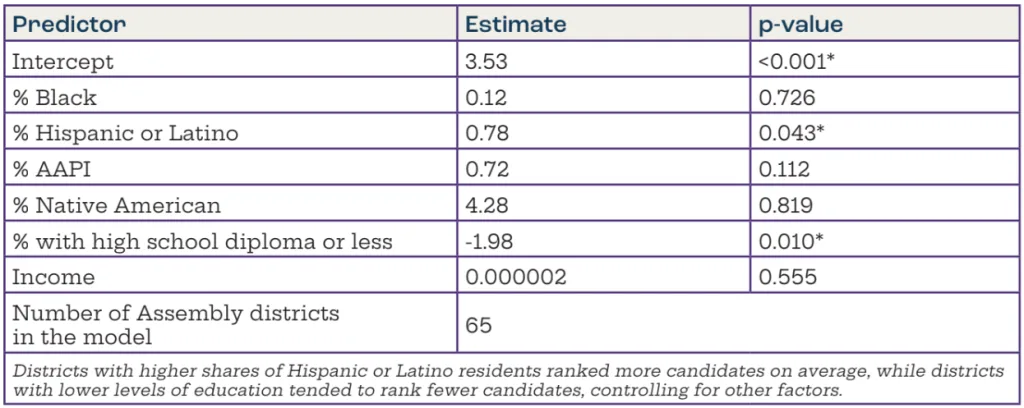
Figure 4: Coefficient-level estimates for number of rankings used: Democratic comptroller primary
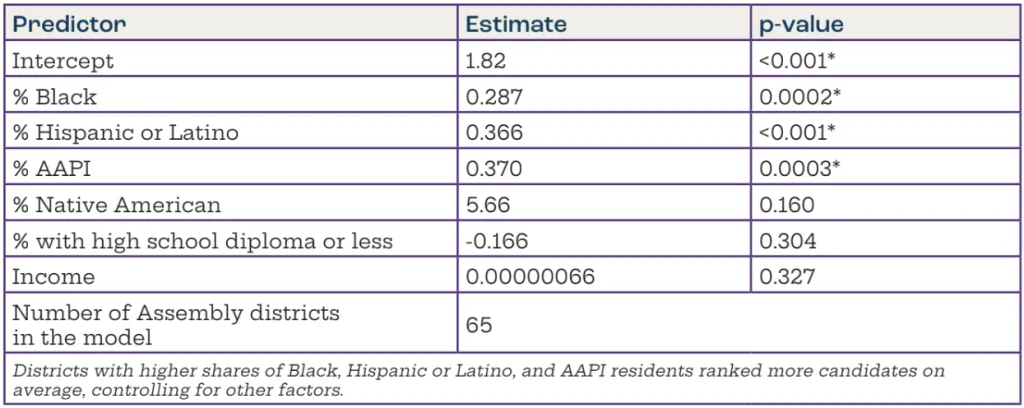
Figure 5: Coefficient-level estimates for number of rankings used: Democratic public advocate primary
Key
* p<0.05, indicates statistical significance
Income is the median household income, education is measured as the percent of the population over 25 with a high school diploma or less, and the remaining categories are the percentage population of each racial group in each Assembly district. Percent White is excluded to serve as a baseline for comparison.
A negative estimate represents a negative relationship (i.e. as the percent of X group increases, the average number of rankings decreases); a positive estimate represents a positive relationship (i.e. as the percent of X group increases, the average number of rankings increases).
We found that only one predictor in one race — higher share of voters with a high school diploma or less, in the mayoral primary — was significantly associated with ranking fewer candidates. We explored whether this decreased the likelihood that ballots from these districts remained “active” throughout the entire RCV tabulation, which is arguably a more important measure of how voters’ voices are heard.
Figure 6: Coefficient-level estimates for active ballot in final round model: Democratic mayoral primary
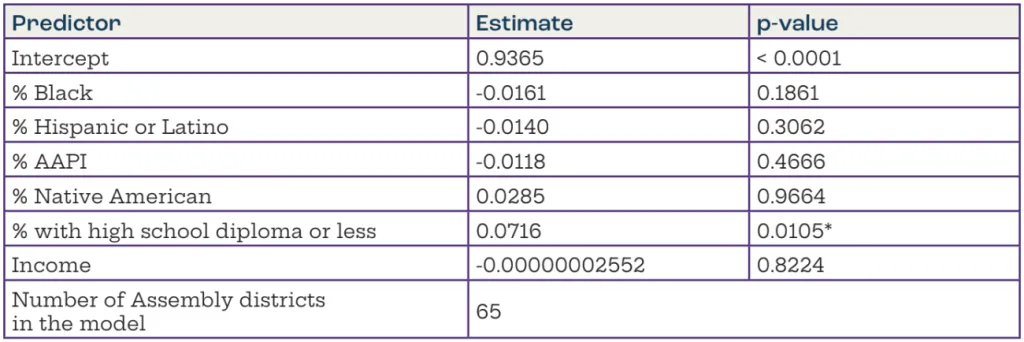
In this contest, voters who ranked either state Assemblymember Zohran Mamdani or former New York Governor Andrew Cuomo had their ballot remain active for the entire RCV tabulation. A total of 95% of voters weighed in between Mamdani and Cuomo by ranking at least one on their ballot, including at least 91% in every assembly district.
This number was statistically higher in Assembly districts with a higher percentage of voters with a high school diploma or less. In other words, voters in these districts were more likely to have either Cuomo or Mamdani on their ballot, and therefore more likely to have their vote count in the final round of RCV tabulation.
This may help explain why voters with less formal education may have been less likely to rank multiple candidates: If a voter ranks a frontrunner first, they may be less likely to rank other candidates without encouragement to do so — because they do not need a backup choice. The data also shows an extremely strong negative relationship between voters ranking Andrew Cuomo first and their overall likelihood of ranking multiple candidates in the mayoral race. In the graph below, each point represents an Assembly district.
Figure 7: Relationship between voters ranking Cuomo first and overall likelihood of ranking multiple candidates
Key takeaways on voter demographics and ranking behavior
Looking at the data holistically, voters of all demographic groups generally take advantage of the opportunity to rank candidates. The number of candidates ranked and specific ranking behaviors appear to be influenced primarily by the dynamics of each race and campaign messaging, which we’ll discuss in the next section.
That said, setting aside who voters ranked and controlling for income and education, there is evidence that voters of color are especially likely to rank multiple candidates.
Overall, the data from this election is consistent with findings from other RCV elections. Voters generally respond to messages from candidates, and while there are several examples of voters of color appearing to rank more candidates, ranking behavior across contests is most likely context-dependent.
More candidates led to more rankings
Across all RCV races on the ballot, New York City voters ranked more candidates when more candidates ran. In other words, voters engaged with a broader set of choices when given the opportunity. We’ve also seen this pattern in other jurisdictions that use
RCV, and in previous RCV election cycles in New York.
On average, 52% of voters ranked multiple candidates in races with three or more candidates. When pooling votes across these races, the figure is still 52%. In the pooled data, that share rises to 64% for races with five or more candidates, and 77% for races with six or more.
Figure 8: Relationship between the number of candidates and the number of rankings
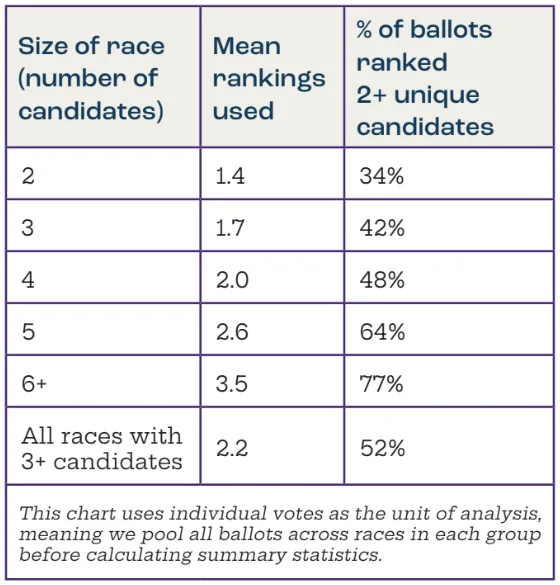
Voters also tended to rank more candidates in the citywide races (for mayor, comptroller, and public advocate) than in down-ballot races like City Council and borough president. However, the citywide contests — particularly the mayoral primary — also drew more candidates, making it difficult to discern an exact relationship.
Though New York voters tend to rank multiple candidates in RCV elections, some ballots may still become “inactive” if a voter chooses not to rank one of the top two finishers. This is equivalent to voters not voting for one of the top two candidates in a pick-one election, or not voting in a runoff election after voting in the first round. Across all of New York City’s primaries this cycle, 3.2% of votes became inactive.
Specifically, across contests that went to an RCV tabulation, 5.6% of votes became inactive. Within this same set of contests, 20.1% of ballots did not have one of the top two finishers ranked first; this is the percentage of ballots that would effectively have become inactive if the city did not use RCV.
For every voter whose ballot became inactive, three voters for lower-performing candidates made their voices fully heard because of RCV.
Error rates dropped and are similar to choose-one races
Ballot error exists in some form in all types of elections. In a choose-one election, an “overvote” describes voting for multiple candidates when instructed to vote only for one. In ranked choice voting, it means ranking multiple candidates at the same rank, such as a voter ranking two candidates as their first choice.
To compare error rates across contest types, we examine first-choice overvotes in ranked choice voting elections. In New York City, a first-choice overvote disqualifies a ballot before it counts for any candidate because voter intent cannot be determined. (Note: An overvote later on a voter’s ballot – for example, ranking two candidates as their third choice – does not do this. This vote would count for the voter’s first choice, and second choice if needed.)
The median error rate across New York City’s 2025 RCV contests was 0.2%. This is on par with the median RCV error rate across the country (also 0.2% in races with 3+ candidates) and lower than the median error rate in New York City’s 2023 RCV elections (0.5%).
When broken down based on the number of candidates in a race, we see a similar pattern in error rates between RCV and non-RCV contests. In New York City’s 2025 RCV elections, the average error rate was 0.4% in two-candidate races and 0.3% for three-candidate and four-candidate races. This is similar to the overvote rate in the non-RCV borough-wide Democratic primaries (for judge of the Civil Court) this year, which similarly averaged 0.4% in two-candidate races and 0.3% in the only four-candidate race.
Additionally, this error rate is far smaller than the average increase in votes counting for finalist candidates because of RCV. That number was 10% across all contested primaries this year; across races that went to an RCV tabulation, it was 26%.
Figure 9: New York City 2025 error rates by contest
Candidates and election outcomes
New York City maintains majority-women City Council
New York elected its first-ever majority-women City Council following its first RCV primaries in 2021, and maintained a majority-women City Council in 2023 and again in 2025. Because most Council districts are safely Democratic or Republican, the results from the RCV primaries are often decisive in who wins the general election.
In 2025, women won 32 of the 51 City Council seats:
- 30 women won “decisive” primaries, in seats safe for their party. Of these 30, 15 ran uncontested, 11 won a majority of first-choice support, and four won via an RCV count. Those four also led in first-choice support, then won majority support with RCV.
- Two women won in more competitive Council districts. One ran unopposed in the primary, and one won via an RCV count.
- Incumbent Republican Vickie Paladino defeated Democratic challenger Benjamin Chou in the 19th District.
- In The Bronx’s 13th District, both major-party nominees were women — Democrat Shirley Aldebol and Republican incumbent Kristy Marmorato. Aldebol was elected in November.
Research from RepresentWomen shows how RCV can reduce barriers that women face when considering a run for office. Most notably, multiple women can run in the same race without splitting votes with one another. The Democratic primary for District 8, which covers parts of Manhattan and the Bronx, shows how this can work in practice.
In the race, a majority of voters selected one of the three female candidates as their first choice, but no single candidate commanded a majority. Elsie Encarnacion led the seven-candidate field with 29% of first choices, and won with 59% in the RCV tabulation. In the RCV tabulation, Encarnacion picked up support from voters who had initially backed the other two women in the race. Votes from Clarisa Alayeto and Rosa Diaz’s supporters broke for Encarnacion over her strongest male opponent by a roughly two-to-one margin.
RepresentWomen’s research also shows that the majority-women Council had a significant impact on policymaking in the city. In its first legislative session after the 2021 election, the Council passed legislation to improve maternal health and create new requirements to ensure access to menstrual products and education. According to RepresentWomen’s research, these initiatives addressed areas of public health that had often been overlooked due to stigma or lack of lived experience among policymakers.
Finally, RCV’s impact on women’s representation is not unique to New York. For example, Las Cruces, New Mexico and St. Paul, Minnesota both elected their first all-female city councils after switching to RCV elections. Oakland elected its first four women mayors — in a row.
Spotlight on the mayor’s race
In the much-anticipated Democratic mayoral primary, RCV delivered more choice, more collaborative campaigns, and a majority winner. New Yorkers were able to rank their favorite candidate first, and still weigh in between the two frontrunners.
Eleven candidates appeared on the ballot, including citywide officials, state legislators, and political outsiders. For much of the race, Andrew Cuomo was thought to be the frontrunner, leading most pre-election polls. However, Zohran Mamdani caught up as Election Day approached.
Mamdani’s campaign was energetic, media-savvy, and well-suited to an election system that rewards candidates who can grow their base of support and appeal to a majority of voters. Mamdani leaned into the coalition-style politics that RCV rewards; he helped raise funds for opponent Adrienne Adams, and “cross-endorsed” opponents Brad Lander and Michael Blake. We discuss cross-endorsements in more detail in the next sub-section.
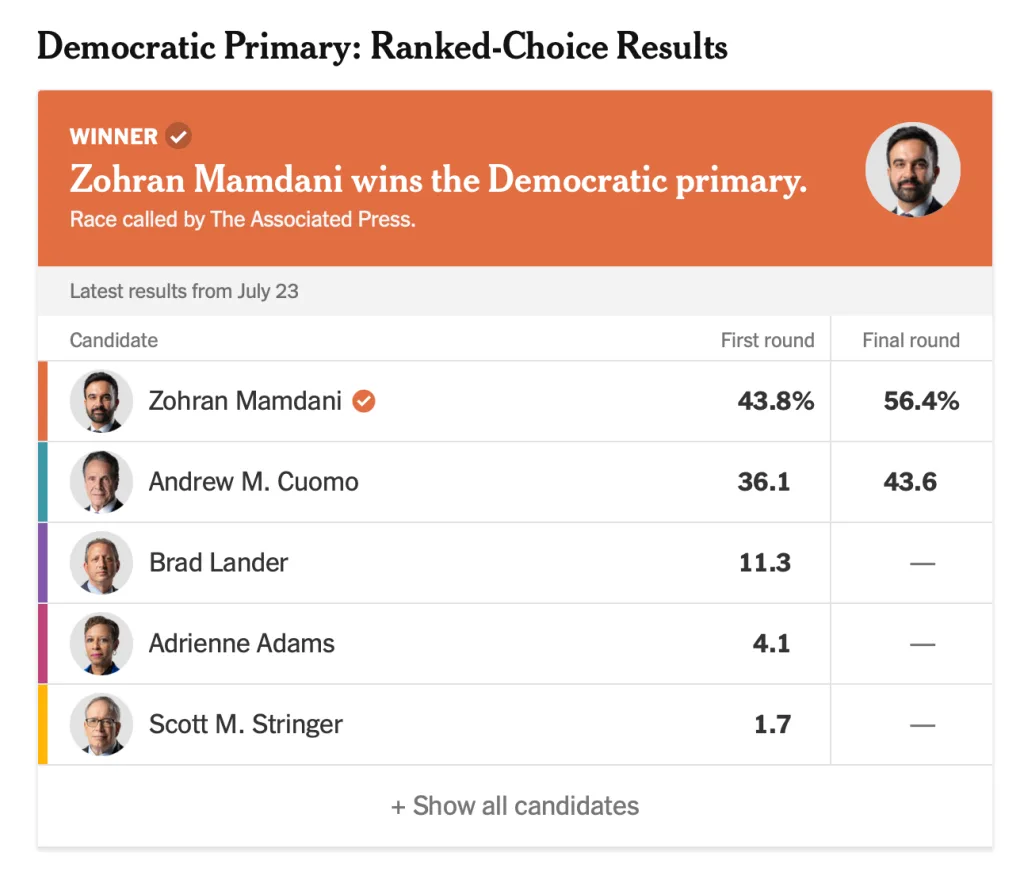
On Election Day, Mamdani was the first choice of 44% of voters, and won a decisive majority of 56% in the RCV tabulation. Second-place-finisher Cuomo won 37% of first-choice support, which grew to 44% in the RCV tabulation. When third-place finisher Lander was eliminated, Mamdani was the overwhelming next choice of Lander’s voters — pushing Mamdani over the 50% threshold.
Figure 10: New York City Democratic mayoral primary results
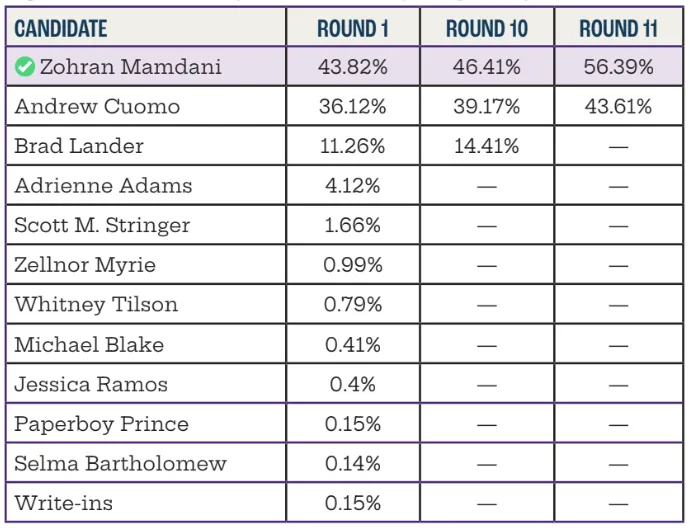
Mamdani identifies as a democratic socialist, but RCV rewards the candidate with the broadest support rather than any particular ideology. For example, the more moderate Eric Adams won New York City’s first Democratic mayoral primary using RCV in 2021.
Further, ranked choice voting may not have changed the winner in this election; Mamdani won the most first choices. However, RCV dramatically impacted the campaign, voter behavior, and the power of each vote.
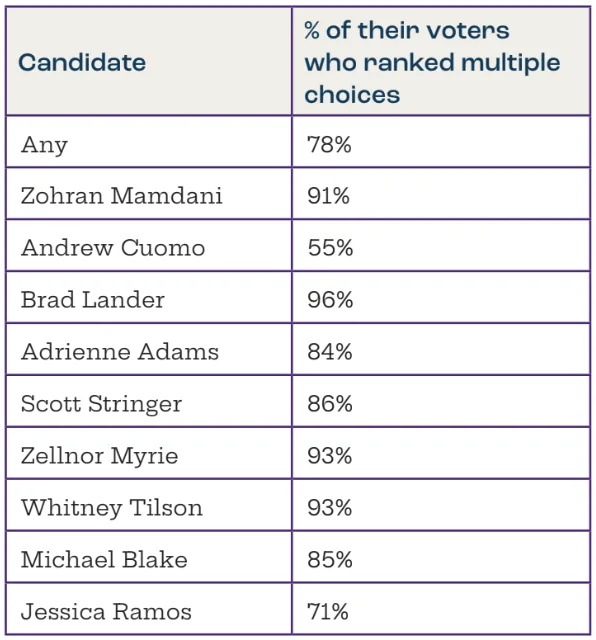
78% of voters ranked multiple candidates in the mayoral election; on average, voters ranked 3.5 candidates. 80% of voters ranked Mamdani or Cuomo first, but 95% of voters expressed a preference between Mamdani and Cuomo — meaning RCV led to a 15-point increase in the number of voters who helped decide the winner. This represents 159,619 New York voters.
Rather than feel forced to select whichever candidate they believed had the best chance of winning, New Yorkers could vote for their favorite while still weighing in between the two candidates who ultimately had a chance to win. In this way, the primary clearly showed the benefits of RCV.
Figure 11: Ranking usage by first choice
Cross-endorsements in the mayor’s race
RCV allows candidates to “cross- endorse” each other – meaning they advise their voters to rank the other as a backup choice. Local organizations also often endorse multiple candidates. These “cross” and “ranked” endorsements make campaigns more positive and provide useful cues for voters, indicating which candidates share similar platforms. This can help voters determine which candidates align with their own views and how to rank their preferences on the ballot.
Moreover, running a collegial campaign is not only possible in an RCV election, but it can also be a winning strategy. Below, we explore instances of “cross” and “ranked” endorsements in the New York City mayor’s race, including whether voters followed the advice and how it may have affected the results.
Of note, the tangible impact of cross-endorsements is difficult to measure empirically, due to extraneous campaign variables like whether the cross-endorsing candidates were already closely aligned on policy and whether the candidates were already competitive. However, by looking at the ballot data in the cast vote record, we can determine if candidates who cross-endorsed were popular backup choices among each other’s supporters, and thereby evaluate the effect of the cross-endorsement.
Zohran Mamdani and Brad Lander
Just as early voting was about to start, Zohran Mamdani and Comptroller Brad Lander released a joint video announcing their cross-endorsement. In the video, Lander praised Mamdani’s grassroots campaign, and Mamdani highlighted Lander’s longtime experience in New York City government. In the last weeks of the campaign, the pair biked together to a joint campaign event, and appeared on The Late Show together.
Figure 12: Zohran Mamdani and Brad Lander at a joint appearance
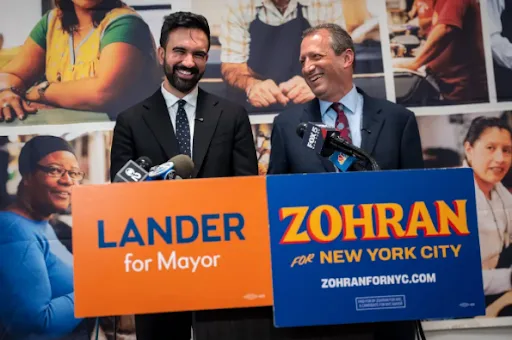
Source: The New York Times
Although there was a relatively short amount of time between the cross-endorsement and Election Day, their message clearly resonated. Mamdani and Lander were the most popular second choice of each other’s supporters. 65% of Mamdani’s voters ranked Lander second, and 74% ranked Lander in their top three choices. 40% of Lander’s voters ranked Mamdani second, and 52% ranked Mamdani in their top three.
This support helped Mamdani secure the majority he needed to win. When Lander was eliminated in the RCV count, 61% of his votes transferred to Mamdani (20% of Lander voters preferred Cuomo to Mamdani, and 19% did not express a preference between the two).
Notably, Cuomo conceded the race before the city ran its RCV tabulation — widely seen as an acknowledgment that Mamdani’s lead would grow in the tabulation, primarily as a result of the Lander cross-endorsement. The concession also reflected the strength of the Working Families Party (WFP) and “DREAM” campaign discussed below.
Days after the Lander cross-endorsement, Mamdani and former New York Assemblyman Michael Blake also cross-endorsed, citing their commitment to defeating Cuomo. Blake was eliminated in an earlier round of tabulation, but his supporters favored Mamdani over Cuomo by a nearly two-to-one margin (42% preferred Mamdani, and 24% Cuomo).
Figure 13: A screenshot from an Instagram reel by the DREAM campaign
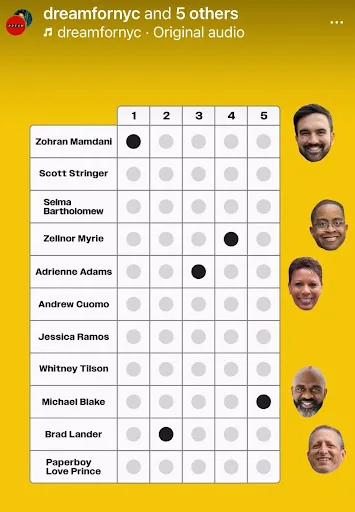
Source: Instagram @dreamfornyc
Figure 14: The four Working Families Party-endorsed candidates, along with two officials from the WFP
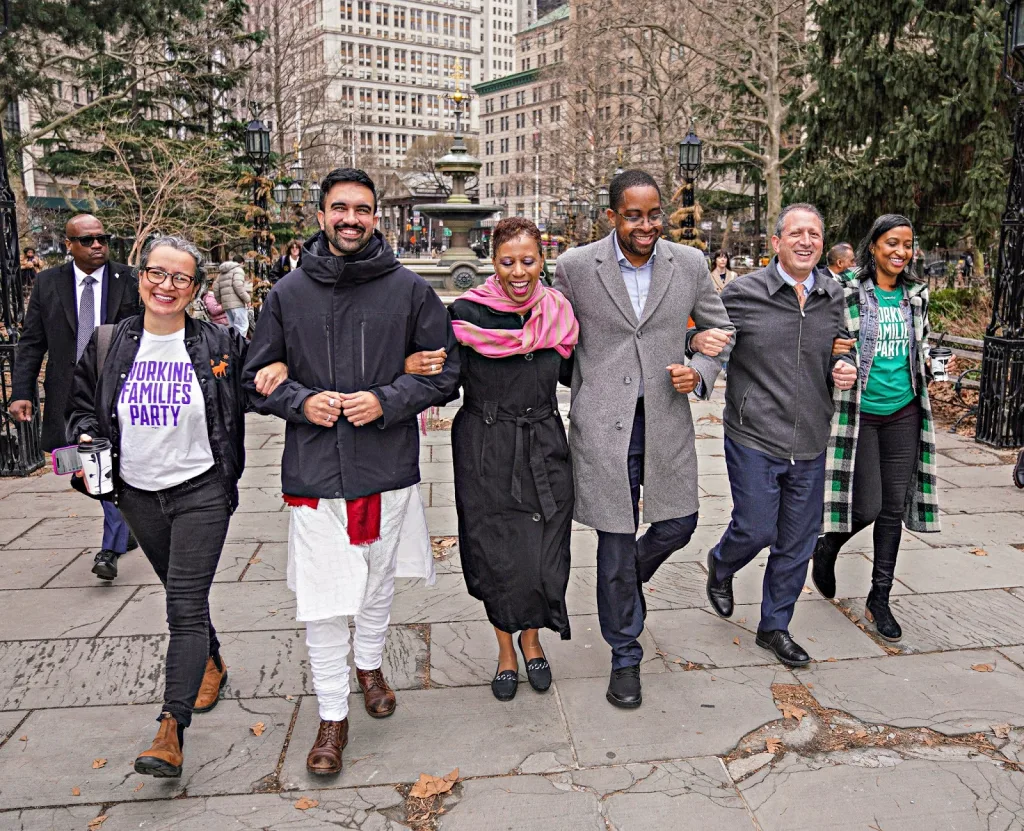
Source: AMNY
The DREAM Campaign
In addition to candidates themselves, parties and community organizations pursued RCV strategies. The “DREAM” (Do Not Rank Evil Andrew for Mayor) campaign and aligned Working Families Party encouraged voters to rank Mamdani, Lander, Adrienne Adams, and Zellnor Myrie. The DREAM campaign also added Michael Blake to its slate in the days before the election. As indicated in its name, the campaign specifically discouraged voters from ranking Andrew Cuomo.
U.S. Representatives Alexandria Ocasio Cortez and Nydia Velázquez also expressed support for this slate.
The influence of the campaign was evident in the results, and was clearly a winning strategy for these organizations and their preferred candidates, with Zohran Mamdani being the biggest beneficiary.
We see the power of these endorsements in the city’s cast vote record data, which shows that 76% of voters who ranked Adams, Blake, Lander, Mamdani, or Myrie first ranked another “DREAM” candidate as their second choice, compared to only 6% who ranked Cuomo second.
Additionally, 70% of voters who ranked Lander, Adams, Myrie, or Blake first had their vote count for Mamdani in the final round, compared to 30% for Cuomo.
The CVR data also allows us to determine how each mayoral candidate would perform in a head-to-head matchup against every other candidate.
Mamdani was the “Condorcet” winner in this primary, meaning that he would defeat every other candidate in a head-to-head matchup. Additionally, both Brad Lander and Adrienne Adams would defeat Andrew Cuomo in a hypothetical matchup – effectively, they were ranked higher on more ballots than Cuomo despite trailing him significantly in first-choice support. This likely reflects a combination of their efforts to collaborate with the Mamdani, Myrie, and Blake campaigns.
Figure 15: Head to head table
Andrew Cuomo received endorsements from Whitney Tilson and Jessica Ramos
In early June, state Senator Jessica Ramos endorsed Andrew Cuomo. Businessman Whitney Tilson also declared he would rank Cuomo second on his ballot. Cuomo did not return either endorsement.
Figure 16: Andrew Cuomo and Jessica Ramos after Ramos endorsed Cuomo
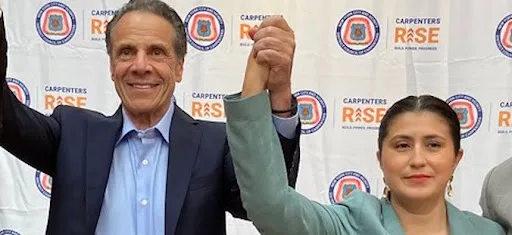
Source: City & State NY
Many of Tilson’s voters appear to have taken his cue. When Tilson was eliminated in the RCV count, 67% of his votes transferred to Cuomo.
The impact of Ramos’s endorsement appears much more modest. Among voters who ranked Ramos first, 25% ended up having their vote count for Cuomo, and 27% for Mamdani. Cuomo was the most popular second choice among voters who ranked Ramos first, but only 16% ranked him second and only 21% ranked him in their top three.
The different responses to Tilson’s and Ramos’ endorsements are logical, and may show the limits of candidates endorsing one another. Tilson and Cuomo are generally considered centrist Democrats, whereas Jessica Ramos is considered more progressive; Ramos was initially endorsed by the Working Families Party and had called for Cuomo’s resignation when he was governor. Further, Cuomo did not engage with RCV – not only did he decline to publicly endorse Tilson or Ramos as a second choice, but he also shared that he only ranked himself on his ballot.
This example suggests that while many voters follow the advice of their favorite candidate, it is just one factor. They may be more likely to listen to ranked or cross-endorsements when both candidates participate, and when the endorsement fits with their understanding of the candidates’ policy platforms.
Long-term benefits for cross-endorsing candidates
In the short term, cross-endorsements created a more collaborative and positive campaign cycle in New York City. There is also evidence of longer-term political and governance benefits.
For example, Brad Lander was widely lauded for his cross-endorsement of Mamdani, spoke at Mamdani’s victory party, and experienced a wave of positive media coverage after the primary – an unusual outcome for a third-place finisher. Lander maintained high approval ratings, and in the months after the primaries, was suggested for a possible administration role or as a candidate for Congress. He ultimately announced a run for Congress in December 2025, and was endorsed by Mamdani on the first day of his campaign.
This is a far cry from New York City’s mayoral general election — which does not use RCV, and was defined by swiping, recriminations, and attempts to force candidates out of the race.
Additional cross-endorsements
Keith Powers and Calvin Sun in the Manhattan borough president Democratic primary
In late June, City Councilmember Keith Powers and Dr. Calvin Sun cross-endorsed each other on social media, citing a shared commitment to affordable housing.
Figure 17: An X post from Keith Powers
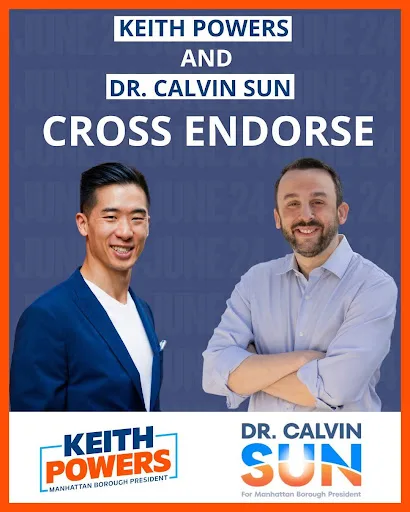
Source: X @KeithPowersNYC
Their only other competitor was state Senator Brad Hoylman-Sigal. On Election Day, 49% of voters ranked Hoylman-Sigal first, compared to 38% for Powers and 13% for Sun. When Sun was eliminated, more of his votes transferred to Powers (34%) than Hoylman-Sigal (24%). However, this was not enough to help Powers overcome Hoylman-Sigal’s 11-point lead; Hoylman-Sigal won with 54% in the RCV count.
Hoylman-Sigal was arguably the frontrunner from the start, having received visibility from his 2021 bid for the same office, and a slate of endorsements from high-profile figures like Attorney General Letitia James and former Manhattan Borough President Gale Brewer. Against those dynamics, the Powers-Sun alliance did not change the trajectory of the race.
Ben Wetzler and Vanessa Aronson in City Council District 4 Democratic primary
Community leader Vanessa Aronson and Democratic operative Ben Wetzler cross-endorsed each other in mid-June. Their partnership was in part a response to the New Yorkers For A Better Future 2025 PAC endorsing a slate of their opponents – Rachel Storch, Virginia Maloney, and Faith Bondy.
Figure 18: An Instagram post by Ben Wetzler
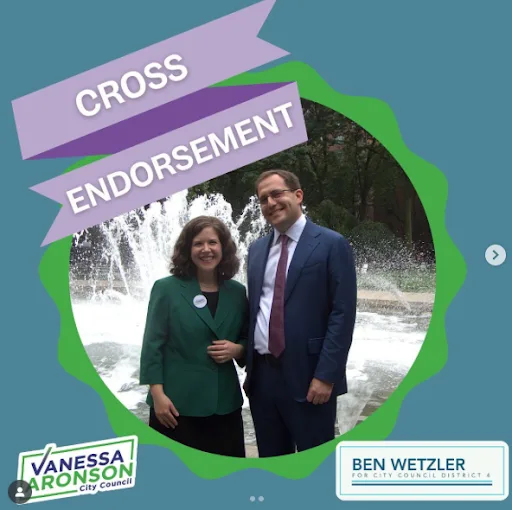
Source: Instagram @votebennyc
The results reflected a tight contest between the Aronson/Wetzler alliance and the New Yorkers for a Better Future-backed slate. In the first round of counting, Maloney, Aronson, and Storch were clustered near the top of the pack, with 27%, 26%, and 23% of first-choice support, respectively. When Wetzler was eliminated during the RCV count, a plurality (40%) of his votes transferred to Aronson, raising her vote share to 35.3% and putting her slightly ahead of Maloney’s 34.6%. When Storch was eliminated next, more of her voters preferred the ideologically aligned Maloney, who won 53%-47%.
As candidates were eliminated in the RCV count, their votes generally benefited the remaining candidates of their respective slates and ideologies.
Figure 19: Council District 4 primary results
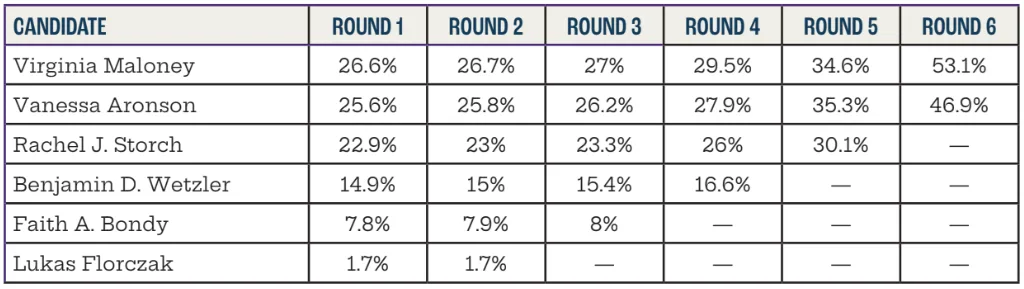
Community groups and political organizations
In addition to candidates themselves, the Working Families Party, and the “DREAM” campaign, several community and political organizations endorsed multiple candidates for office — taking full advantage of RCV, and modeling to voters how to rank their choices.
City & State NY kept a comprehensive list of endorsements in the mayoral race from labor unions, advocacy groups, and political leaders, noting many that provided multiple and/or ranked endorsements. See some examples below:
Figure 20: Endorsements from community groups and political organizations
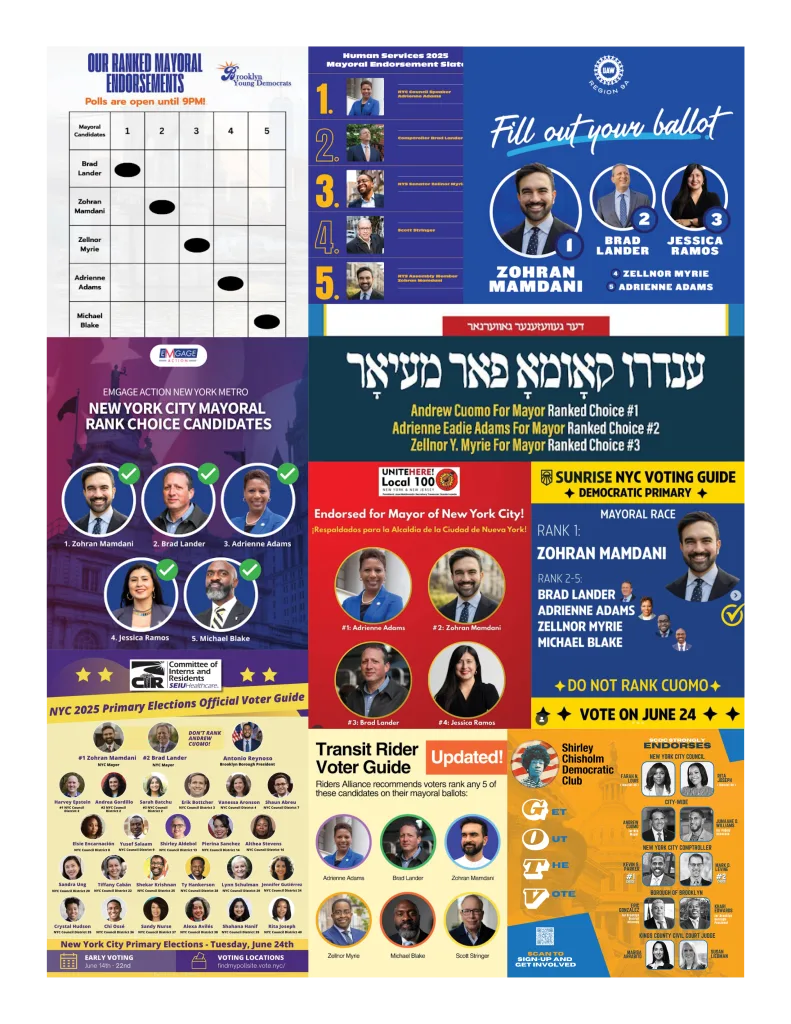
Sources: Brooklyn Young Democrats; Human Services Action; UAW Region 9A; Emgage Action; Bobov sect; UNITEHERE!; Sunrise Movement; Committee of Interns and Residents at SEIU; Transit Rider; Shirley Chisholm Democratic Club
Ranked choice voting implementation
Voter education and election administration
Though ranked choice voting is now the norm in NYC, the city continues to conduct robust voter education ahead of each election. The Board of Elections (BOE) provides explainers, interactive practice ballots, and answers to FAQs.
The New York City Campaign Finance Board (CFB) makes resources available in 13 languages, and ran a gold-standard outreach campaign that involved multilingual voter guides, targeted advertising, community partnerships, and direct engagement with priority communities (e.g. young voters, immigrants, non-English speakers, and people with disabilities).
Every registered New York City voter received this postcard from the CFB — reminding them that the primary would use RCV and including an image of a correctly completed RCV ballot.
Figure 21: RCV education postcard from NYC Votes
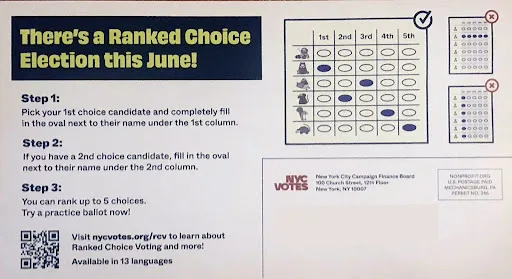
The CFB also tailored its outreach to the diverse communities in the nation’s largest city, drawing on a range of partners, channels, and teaching methods – for example, distributing materials online, in print, and in Braille; and engaging voters through games, giveaways, and sensory activities. The CFB also sent sample ballots to areas that saw higher ballot error rates in the previous two city elections.
In the lead-up to Election Day, the CFB and Common Cause New York (through the Rank the Vote NYC Coalition) partnered with at least 55 organizations and held approximately 90 voter education events across the city. Partners included community and religious groups, social advocacy and civic engagement organizations, and constituency groups representing racial and disability communities. Events ranged from phone and text banks and canvassing to block parties and tabling at Mets and Yankees games. As one example, the Queens Public Library hosted a practice RCV election in which voters ranked different animals. The CFB’s Language Access team provided spoken and American Sign Language interpretation at these events.
Media outlets were also effective voter education partners; as one example, the news team at a local TV station used RCV to decide what to have for lunch and posted the results to the station’s various social media pages. Other outlets that published RCV explainers included amNY, The CITY, and Gothamist/WNYC. The CFB also worked with community and ethnic media outlets to spread the word about the upcoming election.
The New York Times interviewed a series of New York City celebrities – including Sesame Street stars, chefs, and writers – about which candidates they planned to rank for mayor. The Times then published their mock ballots, giving readers another opportunity to see a ranked ballot and consider how they might fill out their own. See an example below:
Figure 22: Shania Taub’s ranked ballot in The New York Times
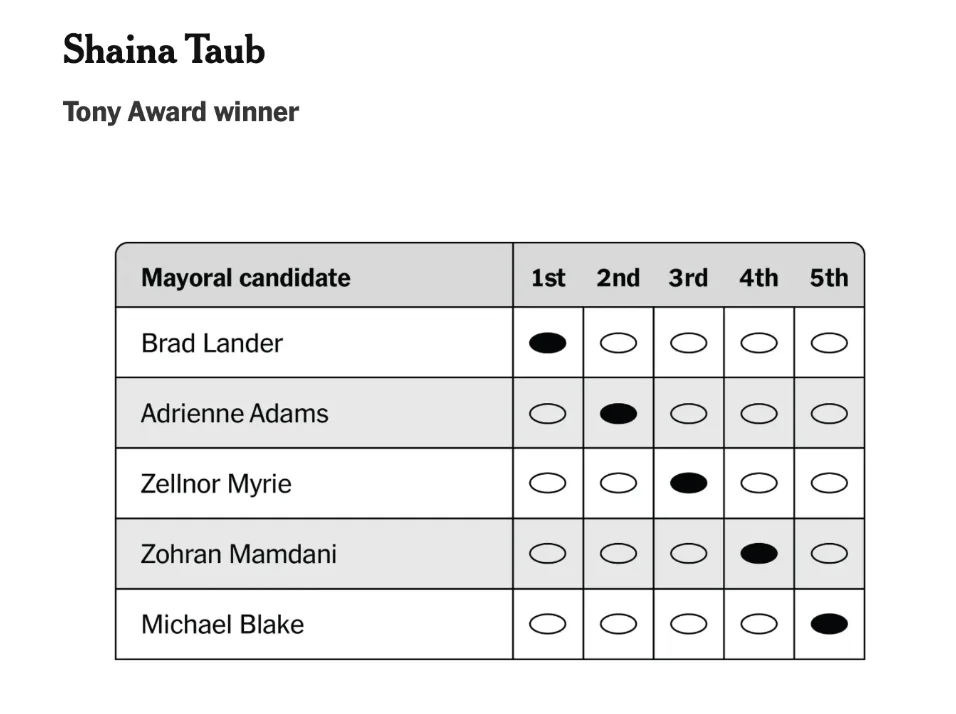
The work of the NYC BOE, the CFB, the Rank the Vote NYC coalition, and the media demonstrates how voter education can be effectively conducted at scale, providing a reference point for other large, diverse cities considering RCV.
The Board of Elections also tabulated, released, and displayed election results smoothly. Perception of the city’s first RCV election in 2021 was somewhat marred by a human error made by an election administrator in Queens; the BOE briefly released results of test data alongside real election results. Though the error was corrected the same day, it added to perceptions that RCV elections were challenging to administer. There have been no similar errors in New York City’s second and third uses of RCV.
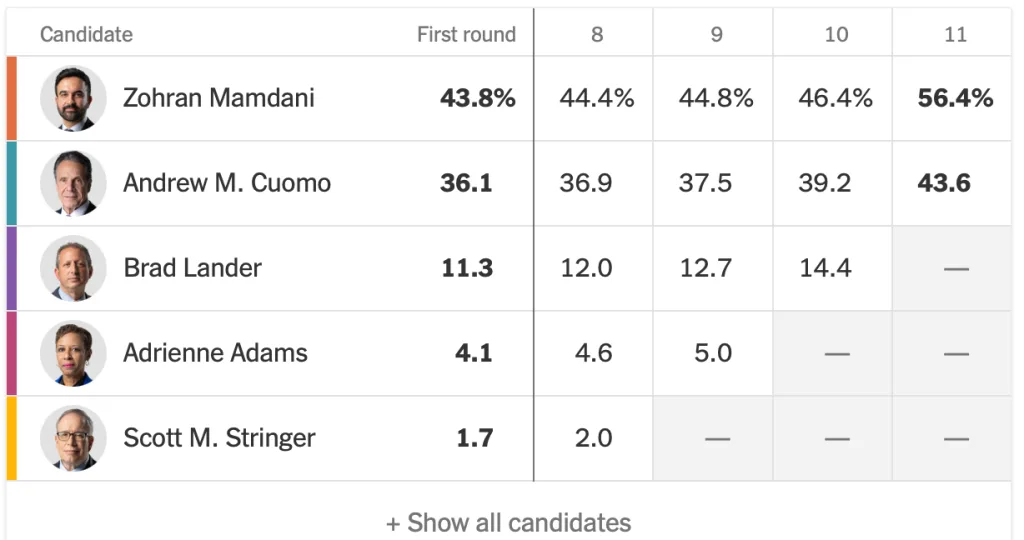
Of note, the BOE uses “batch elimination” in its results reporting. Instead of eliminating candidates one at a time in its RCV tabulations, the city eliminates all candidates whose victory is mathematically impossible. This delivers the same outcome but shows fewer rounds of the RCV count – which led to some questions when batch elimination was employed in the Democratic mayoral primary.
Thankfully, the BOE followed best practices for transparency by releasing a full cast vote record (CVR) – an anonymized digital record showing how each voter ranked the candidates. The CVR data forms much of the basis of this report, and of other independent analyses of New York City’s primary.
Because the CVR is public, independent researchers and analysts can replicate the RCV counts and show the one-by-one order of candidate elimination, as we did earlier in a July 2025 analysis. We discuss the timeline on which the Board of Elections releases RCV results in the “Recommendations for future elections” section.
Media coverage highlights RCV’s impact and effectively displays results
In addition to the media’s role in voter education, coverage focused most on the cross-endorsements and other RCV campaign dynamics in the mayoral race. This was a departure from the 2021 news cycle, when coverage focused more on RCV as a novel voting system.
When your volunteers are knocking on a door, they say, ‘Hi, I’m here on behalf of John Doe.’ The voter says, ‘That’s nice, but I’m voting for John Smith.’ In the traditional structure, that is the end of the conversation. In ranked choice, that’s the beginning of the conversation.
Susan Lerner, executive director of Common Cause NY, in The New York Times
[The Mamdani-Lander alliance] showcased what parliamentary-style coalition politics could look like in the age of so much vitriol and polarization… ranked choice voting, now in place in at least 60 jurisdictions around the country, shaped the competition from the beginning.
Ginia Bellafante for the New York Times
Why are so many people running for the job? Because New York City has adopted a system called ranked choice voting… because voters can list multiple names on their ballot, candidates are telling their supporters who else to vote for.
Stephen Colbert on The Late Show with Stephen Colbert. Zohran Mamdani and Brad Lander appeared together later in the segment.
[RCV] created some interesting incentives… You don’t want to alienate other people’s supporters because you want them to rank you second or third or fourth… So it wasn’t just bomb throwing.
Chris Hayes on the Ezra Klein Show
A remarkable number of New Yorkers saw first-hand how RCV makes our votes more powerful – they had the freedom to express themselves and rank a longshot first, but still had their vote count for either Mamdani or Cuomo in the ranked choice tally.
David Daley, FairVote senior fellow, in The Guardian
The campaigns and outside political groups tried to educate voters about the new voting system, and it appears to have worked…. Roughly three-fourths of voters said they wanted to keep or expand ranked choice voting.
The New York Times
Figure 23: Joint late night appearance by Zohran Mamdani and Brad Lander

Source: The Late Show with Stephen Colbert
Media outlets have also improved their displays of ranked choice voting results, with the New York Times establishing itself as best-in-class. The Times has followed a set of best practices, including:
- Clearly focusing on the final round of tabulation in its displays
- Simply visualizing both the final round of tabulation and voters’ first choices
- Including written explanations of the results, and text indicating that this was an RCV election
- Offering a “bite-snack-meal” approach where interested readers can scroll down the webpage and find more detailed results displays
Figure 24: NYT Democratic primary ranked choice results
“Bite”
“Snack”
Recommendations for future elections
Coming out of its third RCV election cycle, New York City continues to lead the nation in implementing meaningful reform at scale. The city can continue to build on this success in future elections by adopting the following recommendations:
Releasing RCV tabulations earlier and more frequently
New York City released first-choice results on election night, and did not release any RCV tabulations for one week. This timeline is set by the BOE, which chooses to wait until all absentee ballots are received before running its RCV counts. Nationally, the best practice is to report preliminary RCV results as soon as possible, and about 80% of cities report preliminary RCV results within 24 hours.
This tabulation delay was less noticed than it might otherwise have been because the city had a presumptive Democratic mayoral nominee on election night. Given Zohran Mamdani’s lead in first-choice support — and the assumption that most of third-place finisher Brad Lander’s votes would transfer to Mamdani — Andrew Cuomo conceded that night, and Mamdani declared victory. Preliminary RCV tabulations were released a week later.
The early, decisive outcome was likely beneficial to both the Board of Elections and RCV advocates — ultimately allowing RCV analysis and coverage to focus on voter behavior and cross-endorsements rather than results delays. Mamdani’s victory in the mayoral primary ignited a national media firestorm. If Mamdani had been nominated in a “come-from-behind” win in the RCV count one week after primary day, it is likely that the voting system — fairly or not — would also be swept up in the firestorm.
Overall, the BOE delivered a smooth RCV election. That said, the city could improve transparency by releasing preliminary RCV tabulations earlier and more often, in line with the standard approach used in most other jurisdictions.
Expanding RCV to the general election
General elections in New York City do not use RCV, meaning a candidate can win with less than 50% support — and candidates risk splitting the vote with ideologically similar opponents. This became a major theme of the November general election for mayor, with four major candidates running — Mamdani (D), Curtis Silwa (R), Cuomo, and Eric Adams (the latter two filed to run on independent ballot lines). Eric Adams ran an energetic campaign before dropping out less than six weeks before Election Day, though his name remained on the general election ballot.
Media discourse focused on whether Sliwa and/or Adams, both of whom ran on more center- or right-leaning platforms, would drop out and consolidate their support behind Cuomo. There was reportedly a plan to nudge Adams out of the race by offering him an ambassadorship to Saudi Arabia, while Sliwa claimed he was offered bribes to drop out of the race. The final days of the race were dominated by claims that “A vote for Sliwa is a vote for Mamdani.”
If New York expanded RCV to general elections, there would be fewer shenanigans, more voter choice, and a majority-supported winner. While Mamdani will take office with majority support (50.4%), there was significant discussion about the possibility that he would not win a majority and that this would weaken his mandate going into office. If the city used RCV, elected officials would always have a majority mandate to lead.
RCV would also make more votes count, by allowing voters to fully express their preferences – picking their favorite candidate while also weighing in between the strongest candidates in the field. In this case, voters who preferred Sliwa could still express their preference between Mamdani and Cuomo.
The city should expand ranked choice voting to its general elections, giving voters the same freedom and choice they have in primaries, allowing candidates to run freely without fear of playing “spoiler,” and delivering majority winners.
Of note, New York City uses fusion voting, which allows candidates to appear on multiple party lines. If the city were to expand RCV to general elections, it would require careful consideration of how to reconcile the two systems. FairVote has produced a set of best practices for combining RCV with fusion voting, which is available here.
Conclusion
After three election cycles, ranked choice voting has become the new normal in New York City; for New Yorkers, voting is ranking. Polling and cast vote record data alike show that voters take advantage of the opportunity to rank. Moreover, voters engage with the system thoughtfully and respond to factors like the competitiveness of the race, the viability of their first choice, and cues and cross-endorsements from their favorite candidates.
Voters report that they like RCV and find it simple. The city has elected its most diverse governments under the system, and election administrators and community organizations offer a clear set of best practices on how to educate and engage the public.
Coalition-building and cross-endorsements emerged as defining themes of this year’s primaries, reflecting a feature of RCV that voters, candidates, and the media now recognize as central to the city’s elections. The success of ranked choice voting in the nation’s largest and most diverse city offers a compelling model for other jurisdictions considering its adoption and implementation.
What’s next: Questions for future elections
As ranked choice voting continues in New York City, several dynamics will be worth watching in future elections:
Campaign strategies and cross-endorsements
New York City’s first RCV mayoral primary featured just one, late-breaking, “semi”-cross-endorsement – Andrew Yang endorsing and campaigning with opponent Kathryn Garcia. This year, several campaigns cross-endorsed, campaigned as part of candidate slates, and/or appealed to voters as a backup choice.
A key question for future study is whether these coalition strategies will become a regular feature of New York City elections. Just as importantly, how effective are they? To what extent do voters respond to these alliances, and to what extent do the alliances allow candidates to stay in the race and give voice to their platform? Can this feature of ranked choice voting overcome the advantages of name recognition or higher campaign funding?
Competitiveness and incumbency
Both Democratic mayoral primaries conducted under RCV have been “open-seat” contests, which naturally invite crowded fields and fierce competition. (In 2025, Eric Adams sought reelection as an independent rather than in the Democratic primary, before eventually dropping out).
What will happen when a sitting mayor seeks reelection under RCV? Will ranked choice voting create more opportunities for challengers to build momentum?
What to watch for in other elections
Ranked choice voting is an increasingly popular way for cities to run their elections, having grown from just ten cities in 2016 to about 50 cities, counties, and states today. Still, most jurisdictions in the U.S. use single-choice voting or runoff elections to elect their leaders. Under these systems, candidates are incentivized to attack opponents and new voices may be deterred from running for office.
Winners may not have support from a majority of their constituents — or may be chosen in low-turnout, unrepresentative primaries or runoffs. For example, across the Hudson River, Jersey City voters returned to the polls for a December 2025 runoff to elect their mayor and saw a 49% drop in turnout; voters in big cities like Miami and Albuqerque did the same. Chicago and Denver are among the big cities that hold runoff elections, but didn’t vote in 2025. And just down Interstate 95, Philadelphia effectively elected its current mayor with just 33% in a crowded 2023 Democratic primary.
New York City’s 2025 mayoral primary showed how RCV can solve these problems – ensuring a majority-supported winner without a low-turnout runoff, giving voters more choice, and fostering campaigns that are more collaborative and civil.
FairVote remains interested to see if and how local and state election reform advocates across the nation use New York’s example as they make the case for ranked choice voting in their communities.
About the authors
Rachel Hutchinson is a senior policy analyst at FairVote. She is an experienced researcher and writer in the electoral reform space. Rachel’s areas of research include primary elections, voter behavior, and political polarization, and her work has been featured in outlets like Real Clear Politics and NPR. Prior to working at FairVote, Rachel was a fellow at the Institute for Political Innovation.
Adnaan Mohamud was a summer research and policy intern at FairVote. As a political science major at Haverford College, Adnaan is interested in developing a fair and robust democracy. Adnaan is from Seattle, Washington.