What we learned from New York City’s second ranked choice voting election
New York City used ranked choice voting (RCV) for its municipal primaries on June 27, 2023, marking the city’s second use of RCV. Voting ran smoothly, voters took advantage of the option to rank candidates, and RCV is quickly becoming a standard aspect of New York City’s elections.
Explore the content below or download the full report here:
A quieter election cycle
This election cycle had fewer competitive races than New York City’s first RCV election cycle in 2021. This was due to a lack of citywide and borough-wide races like mayor and borough president, and a larger number of incumbents running for reelection in uncompetitive races. By contrast, 2021 had many term-limited incumbents retiring, leading to open fields in most districts.
In 2023, there were 14 primaries with three or more candidates where RCV came into play, including in Democratic, Republican, and Conservative Party primaries.
Election administration and voter education ran smoothly
The New York City Board of Elections successfully administered these primaries, which included a sizable number of mail-in ballots and incorporated a “ballot cure” period to allow voters to correct any issues with their mail-in ballots. Additionally, the New York City Campaign Finance Board conducted voter education and voter engagement initiatives.
NYC Votes, a nonpartisan voter engagement initiative of the New York City Campaign Finance Board, remained the lead agency for ranked choice voting education efforts in 2023. Staff members performed outreach and hosted training sessions, led a comprehensive advertising campaign, and created print and online guides about RCV.
NYC Votes conducted 75 RCV education presentations to educate voters and prepare volunteers to share information with their communities prior to the June primary election. The presentations covered a range of topics including what RCV is, how it works, how to mark a ballot, and how ballots are counted. Trainings and open webinar sessions for the public were presented in partnership with 57 organizations. Seven events were conducted in languages other than English. In total, the agency’s outreach events had 1,606 attendees and trained 450 people to deliver RCV education to diverse communities throughout New York City.
The NYC Votes print Voter Guide was mailed to 3.4 million registered voters who were eligible to vote in the primary, and contained extensive information about ranked choice voting. It offered guidance on completing the ballot, explained the ballot-counting process, and provided a tear-out sheet voters could use to rank their choices for each office and bring with them to vote.
The voter information website nycvotes.org highlighted ranked choice voting information for visitors and provided interactive tools to assist voters. An online practice ballot was provided, ensuring voters would understand how to complete their ballots during the election. The online Voter Guide included a tool that allowed voters to drag and drop their ranked choices in order, and save their rankings to bring to the polls.
This digital education effort for RCV was supported by a $500,000 advertising campaign. Ads ran on popular platforms like Google, Meta (Facebook/Instagram), YouTube, Snapchat, and Twitch, as well as print, connected RCV, radio, and out-of-home placements like bus shelters and subway kiosks. The campaign directed voters to online resources for additional information, and reached 4.3 million voters who made more than 124,000 visits to nycvotes. org in the weeks leading up to the June primary.
Upon completion of the advertising campaign, data showed a 2.2% increase in turnout among typically low-turnout voters who watched NYC Votes videos in their entirety. Voters under the age of 30 were 2.8% more likely to vote after seeing one or more NYC Votes advertisements. These numbers indicate that voters were interested in RCV and engaged with the videos shared ahead of the ranked choice primary.
The print Voter Guide was made available in each of the 13 most common languages spoken in the city. The practice ballot on nycvotes.org was also translated. Additional print materials, including an RCV Fact Sheet, were translated as well. A ranked choice voting explainer video was produced in 13 languages, with voice-overs, subtitles, and translated on-screen text. The videos were published on YouTube and embedded on a multilingual website. A social media toolkit offering suggested captions and graphics illustrating the RCV process was translated and shared with numerous government agencies and partner organizations. Finally, RCV presentations were conducted in Bengali, Chinese (simplified and traditional), Punjabi, Spanish, and Urdu.
NYC Votes could improve RCV education and address outreach gaps in several ways. First, NYC Votes could expand outreach in neighborhoods with above-average error rates on their ballots. Additionally, a paid “train-the-trainer” program would prepare and compensate civic organizations and associations for training their own communities, likely expanding RCV education to a wider audience. NYC Votes could also enhance its education of voters under 30 with targeted social media reels, as well as by partnering with influencers to reach audiences that might otherwise be hard to target.
More candidates led to more rankings
On average, 63% of voters ranked multiple choices in races with three or more candidates, with voters ranking more in more competitive races.
In races with three candidates, 61% of voters ranked multiple choices, perhaps reflecting that voters were less likely to find multiple candidates on the ballot whom they wanted to support. In races with four candidates, 67% used at least two rankings, and voters in those contests ranked an average of 2.6 candidates out of 4.
| Size of race | Mean rankings used | % who ranked 2+ unique candidates |
|---|---|---|
| Two-candidate races | 1.4 | 37% |
| Three-candidate races | 2.1 | 61% |
| Four-candidate races | 2.6 | 67% |
This rate of ranking is an increase over New York City’s 2021 RCV elections for races of comparable size. However, crowded fields in 2021 drew more ranking in the races with five or more candidates; there were no comparable races in 2023.
Ranking usage, 2023 vs. 2021
Methodology: Our calculation is the number of unique candidates ranked. It excludes rankings where the voter did not select a candidate (skipped rankings) and rankings where the voter selected multiple choices (overvotes). If a voter selected the same candidate for multiple rankings, that candidate is counted as one unique ranking.
A cross-endorsement in District 9 had a modest impact on voter behavior
In District 9, opponents Yusef Salaam and Al Taylor expressed support for one another, encouraging voters to rank each other first and second. This type of collaboration between opponents is nearly unheard of in choose-one races, where a vote for one candidate is effectively a vote against all the others. However, RCV creates the opportunity for coalition-building and cross-endorsements, allowing candidates to support each other without harming their own prospects. As Salaam described it, he and Taylor are “together in so many things.”
Evidence suggests that voters often follow cues from parties or candidates about how to use their rankings, but not always. Regardless of candidate behavior, the ultimate decision of how to rank lies with each voter.
In District 9, there was only partial crossover voting between Salaam and Taylor despite their cross-endorsement. 41% of Salaam voters chose Taylor as their second choice, and 35% of Taylor voters ranked Salaam second. Inez Dickens also earned strong second-choice support from supporters of both finalists.
| First choice candidate | Second choice Salaam | Second choice Taylor | Second choice Dickens |
|---|---|---|---|
| First choice Salaam | 41% | 35% | |
| First choice Taylor | 35% | 36% | |
| First choice Dickens | 30% | 32% |
In 2021, polls indicated that “joint campaigning by mayoral candidates Kathryn Garcia and Andrew Yang increased Garcia’s standing with Yang voters by up to 11 percentage points. However, the impact appears smaller in this race. Without robust polling data from before and after the endorsement, we cannot quantify how much the endorsement itself impacted voter behavior.
Demographics may explain voter behavior better than cross-endorsements
Despite the cross-endorsement in District 9, racially polarized voting appeared to play a significant role. Racially polarized voting describes how voters of different when voters of different racial or ethnic backgrounds tend to prefer different candidates, and it is common in many communities in the United States. Racially polarized voting is typically measured using data on race and ethnicity from the U.S. Census Bureau.
In District 9, we examined how voters’ first-choice preferences in each precinct related to that precinct’s racial composition.
How to read this chart: Each dot below represents one precinct in District 9. The horizontal axis represents the racial makeup of the precinct. For instance, in the chart measuring Black voter behavior, the dots farther to the right are precincts with larger Black populations. The vertical axis represents first-choice vote share for the given candidate.
Yusef Salaam performed best in precincts with larger Black populations, as indicated by the upward-sloping line showing a positive relationship. Inez Dickens had similarly strong appeal in precincts with more Black voters.
By contrast, Al Taylor seems to have the strongest appeal in precincts with a larger Hispanic or Latino population.
In this race, racially polarized voting may have had a larger impact on voters’ choices than the cross-endorsement.
Voters of all demographic backgrounds used multiple rankings, but it varied by council district
To better understand voter behavior, we used the same demographic technique described in the section above to examine how voters used their rankings. This let us see whether some voters tended to rank more candidates than others.
In the four districts with highly competitive RCV races (Districts 1, 9, 13, and 41), our findings varied. We conclude that ranking usage in New York depended more on the context of each election than on any demographic factor.
In the District 13 Democratic primary, voters of color tended to use more rankings than White voters, with particularly strong ranking from Black voters.
How to read this chart: Each dot below represents one precinct in District 13. The horizontal axis represents the racial makeup of the precinct. For instance, in the chart measuring Black voter behavior, the dots farther to the right are precincts with larger Black populations. The vertical axis measures the average number of rankings used.
In District 1, a Whiter district overall, White voters appear to have used more rankings, indicated by the upward-sloping line showing that precincts with more White voters used more rankings.
In Districts 9 and 41, flat or nearly-flat lines indicate no statistically significant relationship between race or ethnicity and the number of candidates ranked.
We conclude that, overall, ranking usage in New York City’s 2023 city council elections was not dependent on race or ethnicity, though differences clearly arose within individual districts based on the context of each election. Other reports on RCV and communities of color have found that voters of color tend to rank more than White voters.
Case study on voter behavior by party in District 13
District 13 had competitive primaries for the Democratic, Republican, and Conservative parties. Due to New York’s use of fusion voting in general elections, several parties can choose to nominate the same candidate. The three candidates running for the Republican nomination all also ran for the Conservative Party nomination. We can compare these two races to glean additional insights about voter behavior.
Kristy Marmorato won both primaries, so she appeared on both the Republican and Conservative Party ballot lines in November. However, it took her multiple rounds to earn majority support from Republican voters, while Conservative voters delivered her an absolute majority of first choices (54%), negating the need to conduct an “instant runoff.”
Additionally, voters behaved differently by party. 72% of Conservative Party voters chose to rank multiple candidates. The most common pairing of first and second choices was Marmorato and candidate George Havranek. In the Republican primary, 56% of voters ranked multiple choices. The most common ballot in that primary was Marmorato first, with no other candidates ranked. Voters who choose not to rank multiple candidates in RCV races are typically indicating that they don’t like any of the other candidates, or that they have no preference between them.
Error rates dropped and are similar to error rates in choose-one races
Ballot error exists in some form in all types of elections. In ranked choice voting, as in choose-one voting, ballot error typically means an overvote. In a choose-one election, an overvote means voting for multiple candidates when instructed to just vote for one. In ranked choice voting, it means ranking multiple candidates at the same rank, such as ranking two candidates as first choice.
To compare error rates across contest types, we examine first-round overvotes in ranked choice voting elections. In New York City, a first-round overvote disqualifies a ballot before it counts for any candidate because voter intent cannot be determined. The median error rate across these ranked choice voting contests is 0.5%. This is higher than usual for RCV, but on par with NYC error rates in choose-one elections and lower than the error rate in NYC in 2021.
Error rate ranged from 0.3% in two-candidate races to 0.5% in three-candidate races and 0.9% in four-candidate races. This is similar to the overvote rate in the choose-one borough-wide elections this year, which ranged from 0.3% to 0.5% in two- and three-candidate races.
Table: Error rates by contest
Ranked choice voting protects voters when a candidate drops out
When a candidate withdraws late in a race, their name often continues to appear on the ballot. This can lead to “wasted votes” if voters select that candidate without knowing they’ve dropped out, or if voters cast their ballots early before that candidate drops out.
In District 9, incumbent Kristin Richardson Jordan withdrew from the race one month before the election. However, she still earned 10% of first-choice preferences. With RCV, 90% of Richardson Jordan voters also ranked a second choice, so those ballots didn’t “go to waste.”
For New Yorkers, voting means ranking
With the 2023 election cycle, New York City joins dozens of other jurisdictions around the country where RCV is now a standard part of the election process. RCV delivered on its promises in New York City, including delivering consensus winners, encouraging voter engagement, and promoting coalition-building campaign strategies. RCV will continue to improve elections in New York City, but the system itself is no longer the story – it has largely faded into the background. For New Yorkers now and in the future, voting means ranking.
About the author
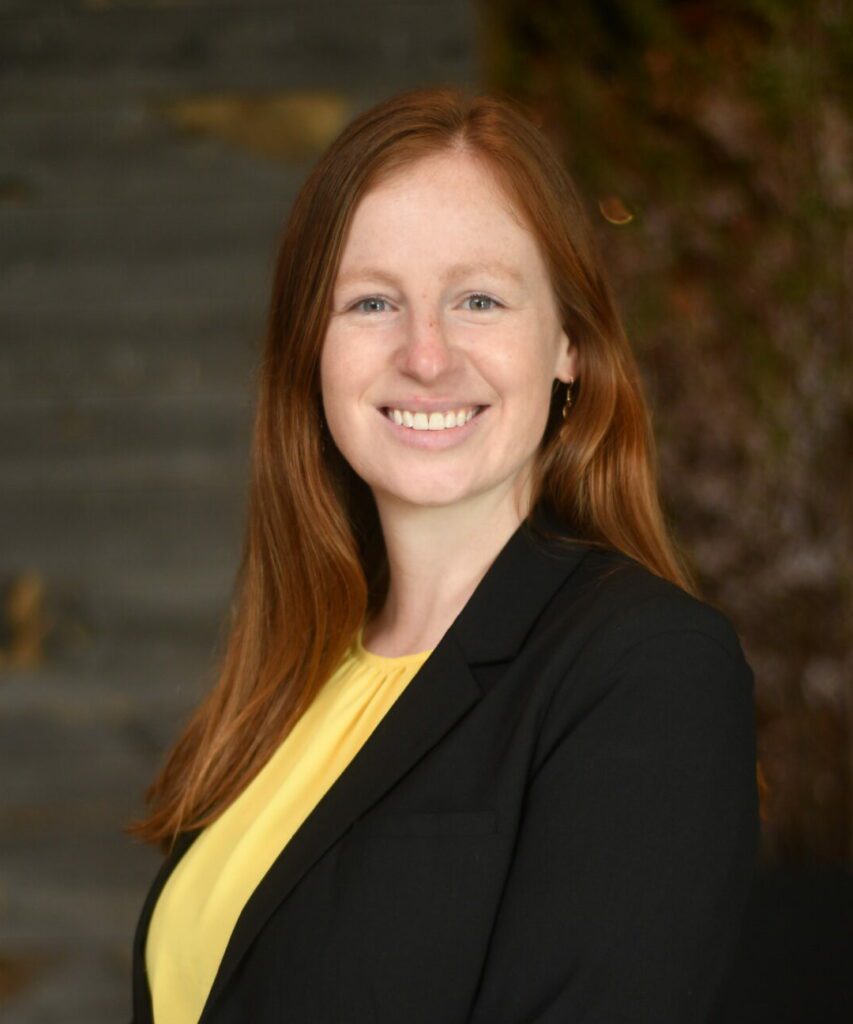
Deb Otis is the Director of Research and Policy at FairVote. With a decade of experience in research and analytics, Deb is passionate about sharing the data-driven case for why our country needs election reform. Deb’s areas of research include ranked choice voting, proportional representation, comparative electoral systems, representation for women and people of color, election recounts, and the electoral college.