Ranked choice voting elections & collaborative campaigning in 2026

The midterm election is just a week away. In many places, that means a flood of attack ads and negative campaigning. But in cities, counties, and states that use ranked choice voting (RCV), many candidates are taking a different approach: asking their voters to rank a rival second.
Community and political organizations are also playing nicer in RCV cities. In choose-one elections, interest groups typically back one candidate and tear down their competitors. But with RCV, many unions, clubs, and newspapers are backing multiple candidates in the same race.
Read on to see how RCV is encouraging a more collegial style of campaigning in places like the California Bay Area; Alaska; and Portland, OR.
This content is for educational and informational purposes only. FairVote is a 501(c)(3) organization and does not support or oppose any candidate for elected public office.
The Bay Area
In Berkeley, City Council District 8 candidates Mari Mendonca and Michael Wallman are encouraging their supporters to “rank one of them first and the other second, in the order you prefer” on their joint campaign website. Here’s what they have each said about the other:
I’m supporting Michael because he has committed himself to this campaign and he cares deeply about Berkeley and our community
– Mendonca, speaking about Wallman
I’m supporting Mari because of her unrelenting commitment and dedication to Berkeley and its people.
– Wallman, speaking about Mendonca
Local groups including the Berkeley Firefighters Association, Berkeley Neighbors for Housing and Climate Action, and Green Party of Alameda County have issued ranked endorsements for Berkeley RCV races.
In Albany, CA, Robin López and Aaron Tiedemann are running as a slate for two at-large Council seats that will be elected using the proportional form of RCV. The pair have a joint campaign website dubbed “Albany Forward.” López has used his Instagram to promote their partnership, sharing the slate’s endorsements and events the two are co-hosting. López currently serves on the council, and Tiedemann served from 2020 to 2024.
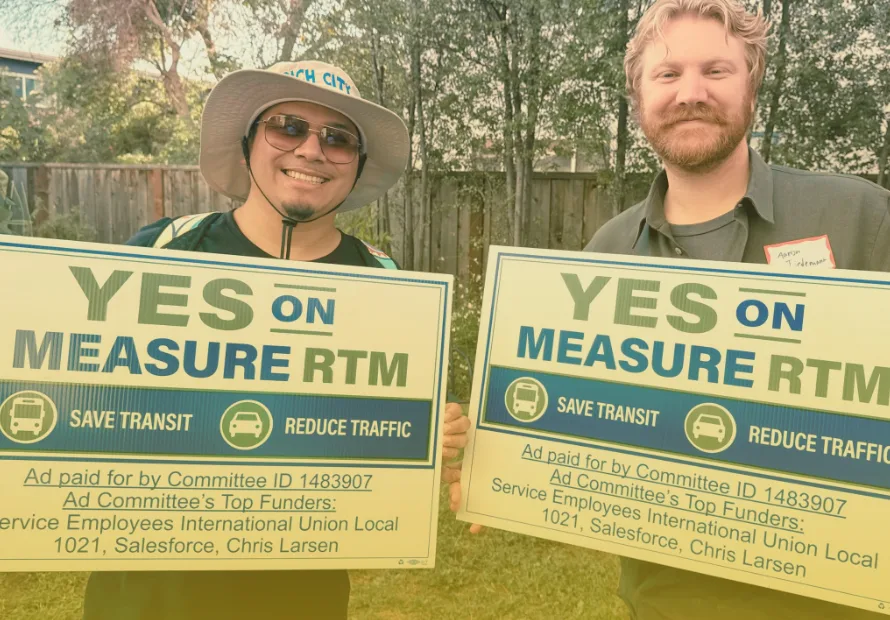
In San Francisco, candidates are supporting one another in two RCV races for the Board of Supervisors. In District 8, candidates Gary McCoy and Darshini Patel have encouraged voters to rank both of them. Here’s how they’ve made the case for each other:
She is about getting back to basics in San Francisco and making sure the city is working for folks.
– McCoy, speaking about Patel
At a time when I think we need to find and elect leaders who have our community’s best interest at heart, I think Gary is a strong person for that. So, at the end of the day when I look at the field and think if not me who else it can be, I think Gary and I share a lot of the same values.
– Patel, speaking about McCoy
In District 10, candidates DJ Brookter and JR Eppler have formed an “anti-billionaire” alliance, urging voters to rank each other first and second. Speaking with The Voice of San Francisco in September, a third candidate – Shawn Richard – expressed support for both Brookter and Eppler:
We’re supporting each other. I think you have to team up with others in ranked-choice voting, and I believe that this is the best team that can actually come together to get something done.
Local organizations like the Sierra Club, SEIU 1021, the Working Families Party, the Harvey Milk LGBTQ Democratic Club, SF YIMBY, and the Bay Area Reporter have endorsed multiple candidates for San Francisco races – often in ranked order.
Alaska
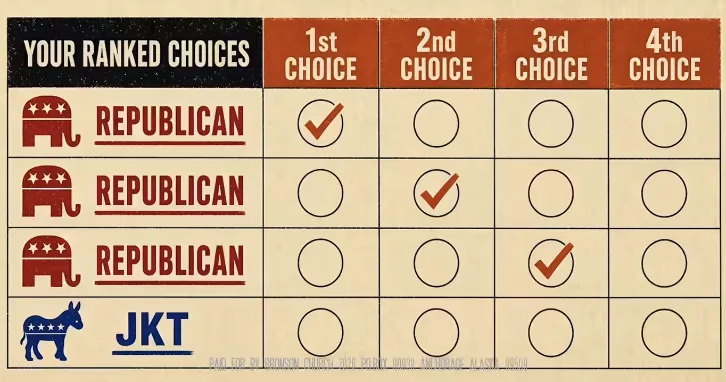
In Alaska, Republican gubernatorial candidates Dave Bronson and Treg Taylor released a joint campaign video encouraging Republicans to rank all three Republican candidates competing for the seat. Republican Congressman Nick Begich and outgoing Governor Mike Dunleavy also encouraged voters to rank every Republican in the race.
In the U.S. Senate race, incumbent Dan S. Sullivan put out a jingle reminding voters that they can rank him second if he’s not their first choice.
Portland and Multnomah County, OR
Portland is the largest city in Oregon’s Multnomah County; both will use RCV for their local elections this year. Multnomah County will use RCV for the first time to elect its county chair and District 2 commissioner. Groups like East County Rising, PCCFFAP, and SEIU 503 have issued ranked endorsements.
In Portland, voters will elect three city councilors each in Districts 3 and 4 using proportional RCV. In District 3, incumbents Tiffany Koyama Lane and Angelita Morillo have been campaigning together, as they did in 2024. Another District 3 candidate, Keir Legree, is recommending that voters rank two of his opponents – Kellie Torres and Steve Novick – second and third.
The City Club of Portland hosted a debate where District 3 candidates were asked who they would rank as their second and third choices. Watch that clip here:
Groups including The Street Trust and Portland for All have recommended that voters rank multiple candidates.
Ranked choice voting makes elections better
In RCV elections year after year, we see collaborative and positive campaigning among candidates of every political stripe. This dynamic is also consistent with research showing RCV makes campaigns more positive.
In addition to making politics more civil, cross- and ranked endorsements provide voters with useful cues about how to rank candidates in line with their own values; there is significant evidence that voters follow these cues.
FairVote will be watching these and other RCV races closely this November. Stay tuned for more.