Speaking your language: How RCV jurisdictions are increasing language accessibility
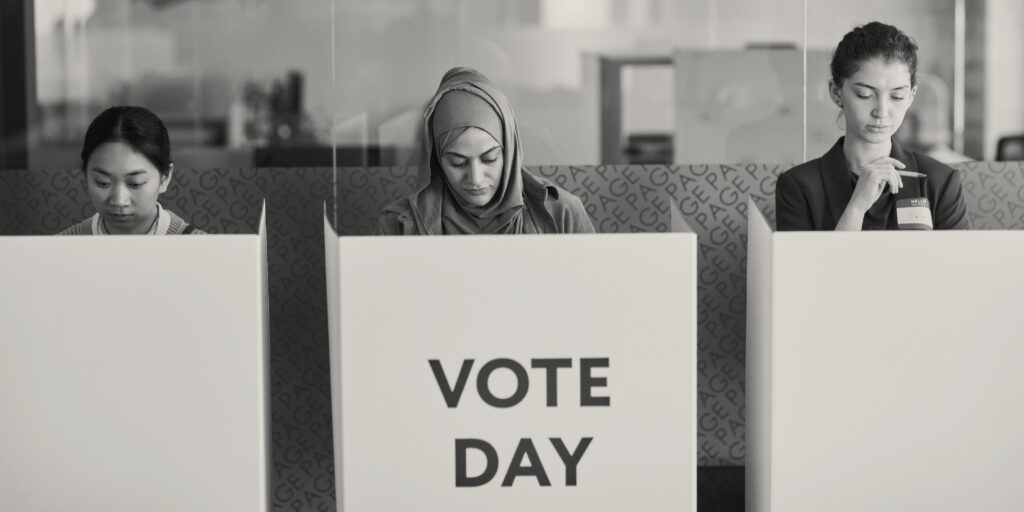
In 2019, approximately 68 million people in the United States reported speaking a language other than English at home. Without an official language, the United States has a duty to ensure voters can understand and complete a ballot regardless of whether they speak English. Jurisdictions that use ranked choice voting (RCV) are leading by example when it comes to language access.
Federal law recognizes that people who “are American Indian, Asian American, Alaskan Natives, or of Spanish heritage” have historically faced language barriers to voting. Section 203 of the Voting Rights Act seeks to remedy this. Jurisdictions are required to translate all election information if the population speaking that language: (1) belongs to one of the four groups above and, (2) is more than 10,000; or is more than 5% of all voting-age citizens; or, on an Indian reservation, exceeds 5% of all reservation residents, and (3) the illiteracy rate of the group is higher than the national illiteracy rate.
Voter education and administration must comply with federal language accessibility requirements. This applies to all states and cities in the country – including the 60-plus that use RCV.
In 2022, Alaska used RCV for the first time. The Alaska Division of Elections was tasked with leading voter education. The U.S. Census Bureau estimates that 15.7% of Alaska’s population are American Indian or Alaska Native in 2022. The Alaska Division of Elections created videos explaining RCV in 10 native languages, in addition to Spanish, Tagalog, and English. The Division also runs a toll-free hotline for residents needing language assistance at any point in the voting process.
Alaska uses RCV statewide. Other states, like New York and California, have cities that use RCV for some elections and single-choice voting for others.
In preparation for New York City’s first RCV elections in 2021, the city’s Civic Engagement Commission created voter education videos in 13 languages including Arabic, Bengali, and Haitian Creole. In addition, bilingual interpreters were stationed in polling places across the city where languages other than English are commonly spoken.
Many RCV jurisdictions go even further than the Voting Rights Act requires. California lowered the threshold for offering materials in a language to 3% of the population speaking that language, rather than 5%. In San Francisco, the Department of Elections has year-round bilingual personnel to support non-English speaking voters. Similar to Alaska, San Francisco has a phone bank with employees fluent in English, Chinese, Spanish, and Filipino. The city also employs a service to provide interpreter assistance over the phone in over 200 languages. In addition, partnerships with over 400 community organizations help the Department reach target populations of voters and potential voters. Voters can request to receive translated materials online, including the official ballot, facsimile ballots, and the state voter information guide.
Election administrators in RCV jurisdictions are complying with, and often going beyond, federal laws which ensure that all voters have access to the ballot. These jurisdictions are doing the same for their single-choice elections too.
RCV is a better way to elect officials – making more votes count and promoting representation of historically underrepresented groups. Language accessibility programs remove a barrier to voting. Together, the two have the power to make our democracy more equitable.