Uncompetitive and Unrepresented: Voters Locked Out of Representation
Download the full report here, or explore the content below.
Executive Summary
Tens of millions of Americans have essentially no voice in the U.S. House due to our broken winner-take-all elections. This report estimates the number of voters “locked out of representation” and proposes solutions to restore a voice to every voter.
Key findings include:•
- Only 8% of U.S. House elections in 2022 were truly competitive.
- About 62 million eligible voters live in districts that are safe for the political party they oppose.
- The Fair Representation Act would give a voice to all Americans who are currently locked out of representation.
Full Report
Following the 2022 congressional elections, FairVote published two new reports, Dubious Democracy and Monopoly Politics, which detailed how the current House of Representatives was selected in the least competitive races since 2016.
Out of the 435 U.S. House elections, there were only 36 truly competitive races, or roughly 8% of elections. Relatedly, 98% of incumbents who competed in the general election won, primarily due to districts being overwhelmingly safe for one party.
Safe districts are often thought of as “red” and “blue” districts, but if we dig into the numbers, we find that this characterization does a disservice to the diversity of thought and experience within them. There are many voters who prefer Democrats living in safe Republican districts in places like Arkansas and the Texas panhandle; and there are many voters who prefer Republicans living in safe democratic districts in places like Massachusetts and Manhattan. And that’s saying nothing of the voters who have a mix of political viewpoints or prefer a different political party altogether. These people vote, but in a winner-take-all system, their votes are insufficient to actually elect anyone.
Estimating a precise number of voters locked out of representation is more difficult than you might expect. You cannot use voter registration. Many places don’t ask voters to list a political party when they register to vote, and in those that do, many voters identify differently in their registration than in how they vote at the ballot box.
Fortunately, the tool FairVote uses in its biennial Monopoly Politics report provides a solution. In Monopoly Politics, we predict the results of U.S. House elections before each election cycle by determining a district’s partisanship – how much its voters prefer Republicans or Democrats, all else being equal. Partisanship is a percentage, so we can multiply that percentage by the approximate number of eligible voters in the district (provided by the United States Census Bureau) to estimate the number of voters in each district who prefer Republicans and the number who prefer Democrats.
Our findings for 2023 include:
186 million eligible voters live in safe districts
Only 53 million voters live in districts not safe for one party
About 36 million eligible voters who prefer Democrats live in safe Republican districts
About 26 million eligible voters who prefer Republicans live in safe Democratic districts
Summing these values, about 62 million eligible voters live in districts that are safe for the political party they oppose.
The exclusive use of single-winner districts for representation is unusual – only a few countries elect their legislative bodies this way. Defenders of the system often cite the benefits of geographic representation: single-winner districts ensure that everyone has “their” local representative. But as these numbers show, about 62 million eligible voters have a local representative that does not vote in their interests. Such voters may feel “represented” by members of their preferred party who represent other districts (say, voters in a safe Republican district who identify more with Nancy Pelosi or Alexandria Ocasio-Cortez than with their own representative) , but those members are not accountable to them.
Single-winner districts can never adequately represent the diversity of thought and experience present in all geographic regions of the United States, because it is impossible for one representative to adequately represent conflicting viewpoints.
However, there is an alternative to single-winner districts. Under a proportional ranked choice voting system like the Fair Representation Act, larger districts would each send three, four, or five members to the House of Representatives. Each of those members would be elected by a distinct group of voters, such that nearly every voter would actually help elect one of the winners.
Simulations of possible Fair Representation Act districts show an equal share of seats for Republicans and Democrats. Republicans in Manhattan and Democrats in Arkansas would never again be locked out of representation. In essence, the 62 million voters who are locked out of representation would go down to nearly zero. This provides a powerful reason to support a model like the Fair Representation Act for elections to the House of Representatives and other legislative bodies.
Download the Data
About the Author
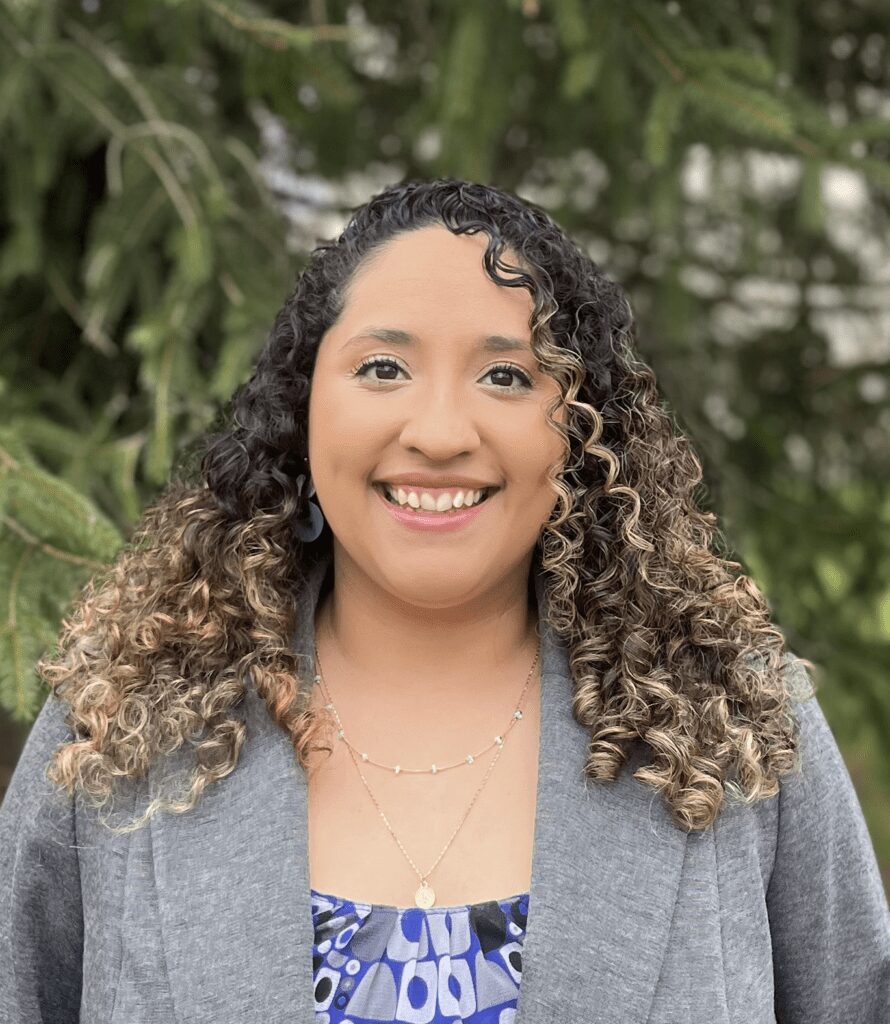
This report was created by Sabrina Laverty. Sabrina is a Research Analyst at FairVote, where she researches city, state, and nationwide RCV efforts. Before joining FairVote, she worked as a Researcher and Graduate Teaching Assistant at Columbia School of Social Work. Sabrina has experience in conducting qualitative and quantitative research, community organizing, counseling children and teens, and providing services to immigrants and refugees. Sabrina received a Master’s of Science in Social Work at Columbia University and a Bachelor’s in International Studies at American University.