Making multi-party democracy work for the United States
American voters are increasingly ready for multi-party democracy. The share of voters identifying as independents is near a historic high, particularly among younger Americans. The Democratic and Republican parties are under strain from internal ideological divisions, and survey data consistently shows voter interest in new options.
Despite these indicators of readiness from voters, we lack readiness institutionally – for example, many states have rules that discourage minor-party participation – and politically, with ingrained opposition from party elites and policymakers. A path toward multi-party democracy depends on bridging this gap.
This piece discusses a vision of “two-and-a-half party” multi-party democracy that could work for the United States, and then aims to chart a path toward it.
Much of today’s frustration with politics stems from a lack of democratic responsiveness. Congress often fails to act on issues that matter, even when there is broad public support for change. One major reason: Neither party feels electorally threatened in its own strongholds. If Democrats or Republicans fail to deliver for voters, they can still keep their seats due to a combination of gerrymandering and lack of competition.
Responsiveness is the key value by which we should judge whether a democratic system is working. A system works well when voters can shift their support and meaningfully influence electoral and governing outcomes. In a move toward multi-party democracy, the key question is not how many parties we should have, but rather what conditions will make parties responsive to voters and represent voters’ interests.
Proportional representation (PR) systems create or incentivize multi-party democracy by acting like a pressure valve. When voters can credibly defect to alternative parties without “wasting” their vote, major parties face real electoral consequences for inaction and are forced to adapt.

Two American institutions complicate our transition to full multi-party democracy: the presidency and the Senate. Both rely on high-profile, winner-take-all elections that naturally collapse into two-candidate contests. Given the difficulty of constitutional change, we expect they will remain largely intact. Their continued importance — along with the national fundraising and organizing apparatus built around them — will reinforce the dominance of two major parties.
Given these challenges, there are reasons to be skeptical that we will achieve a fully fragmented multi-party system. A more plausible outcome – and the more relevant one for improving responsiveness – may be a system that allows additional parties or factions to compete meaningfully alongside the two dominant ones.
Political scientists have long recognized a middle ground between two-party and fully multi-party systems: the “two-and-a-half party system,” featuring two dominant parties alongside smaller ones that often play a pivotal role in coalition governments. Many countries have fit this model at various points, including PR countries like Germany and Australia, and non-PR countries like Canada. What they have in common is more responsive policymaking. If the major parties fail to deliver for voters, new parties can arise and capture vote share.
One recent example is the Australian Green Party. Australia’s political system revolves around two major blocs – Labor and the Liberal-National coalition – but smaller parties and independents regularly win representation. The Australian Greens, for instance, won enough Senate seats in 2010 to demand passage of a landmark climate law as the price of support for the coalition government.
This “pressure valve” is the key benefit of multipartyism, and can function even with a limited number of parties. When voters have credible alternatives, parties must respond or risk losing support. The goal should not be to maximize the number of parties, but to ensure the system allows for adaptation. A system with many parties risks fragmentation and instability. The “two-and-a-half party” system mitigates these risks by maintaining large anchor parties, while allowing for meaningful competition. We hypothesize that a “two-and-a-half-party” system is more plausible for the United States than a full multiparty system.
We will need a mix of structural solutions and cultural shifts to move toward a two-and-a-half party system. On the structural side, PR in multi-member districts is the most important piece. PR would allow for increased competition and better representation for diverse communities. But PR alone is not enough.
Congress would also need to function differently. In the near term, re-empowering congressional committees and expanding opportunities for members to bypass leadership to bring legislation to the floor could help.
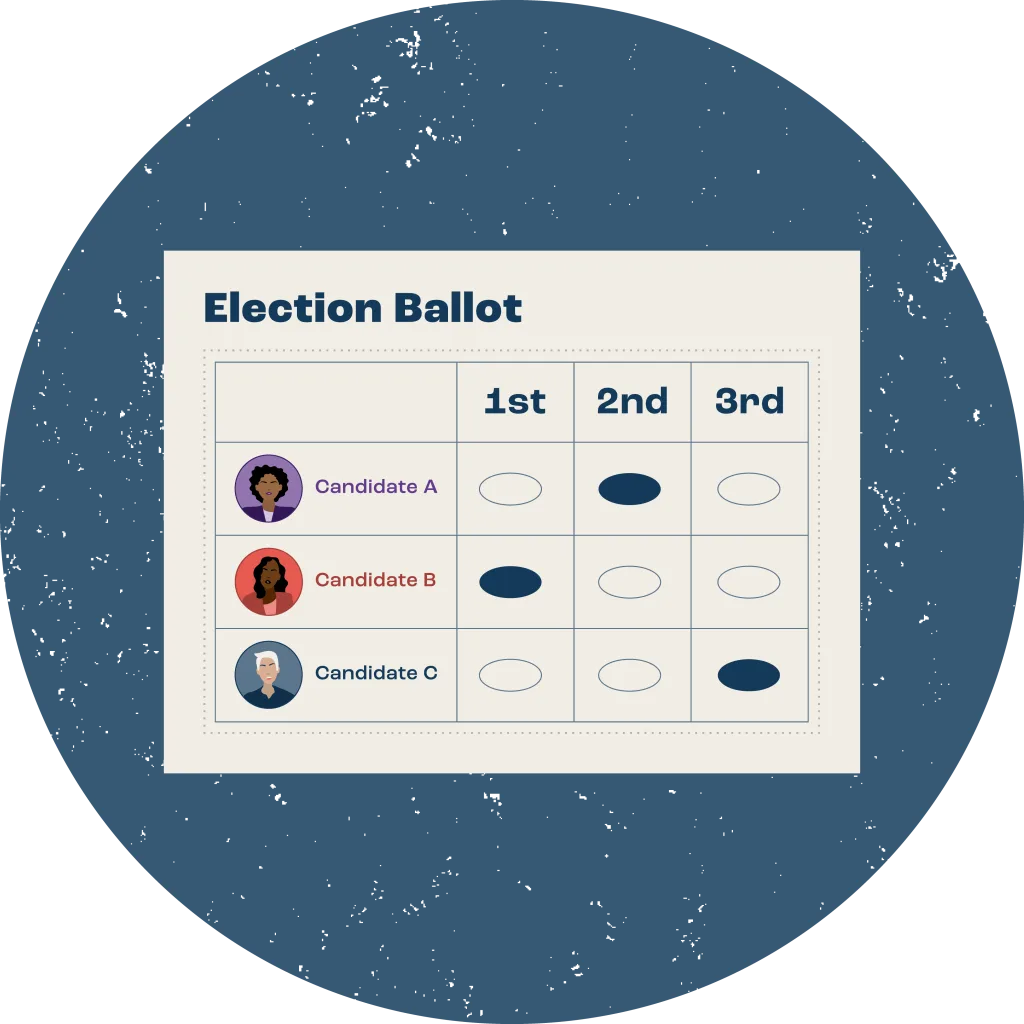
At the state level, one focus should be the adoption of reasonable ballot access laws that allow new parties and independent candidates to build power and compete. Ranked choice voting (RCV) can also help. In Alaska, RCV has sustained a viable pathway for independents, led to a bipartisan governing coalition in the state legislature, and protected aisle-crossing politicians like Senator Lisa Murkowski.
Some of these reforms may not seem strictly necessary to the long-term goal of multiple healthy parties and coalition government. But the road from here to there necessitates breaking structural gridlock, and empowering elected leaders to prioritize responsiveness to voters.
Cultural shifts are also important, and parties need to find new ways to get citizens engaged in the face of our long-term decline in civic participation. Both institutions and cultural norms evolve gradually. Yet, over time, structural reforms and cultural change can reinforce each other. Exposure to more competitive elections, viable alternative parties, and coalition-style governance – even at local or state levels – can help normalize these practices.
A crisis moment can accelerate change, or put ideas onto the table that would have seemed far-fetched in more normal times. But waiting for a crisis is not a strategy. The reforms discussed here – modernizing Congress, expanding ballot access, and adopting PR and RCV in localities and states – are concrete steps we can take today toward PR and multipartyism that will build capacity and familiarity.
For institutional reasons, the United States may not leap to a fully fragmented multi-party system, though it may not need one to realize the benefits of multipartyism – in which voters have real choices, and parties are truly responsive to voter preferences.
Acknowledgements
This paper was originally written for the 2026 Deliberation and Competition – Pathways for Renewing Democratic Participation conference hosted by the Ash Center and Columbia World Projects. It has been lightly edited for publication.