Ranked choice voting event at Columbia School of Social Work
In a time marked by political polarization and deep systemic challenges, finding innovative approaches to address these issues is more crucial than ever.
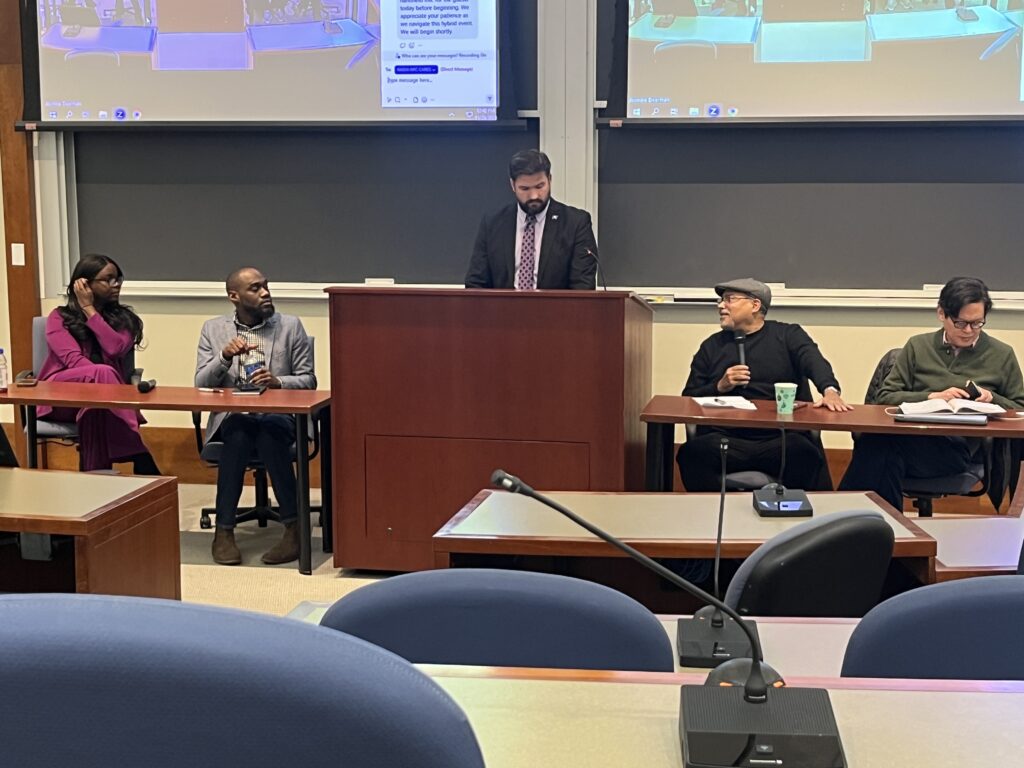
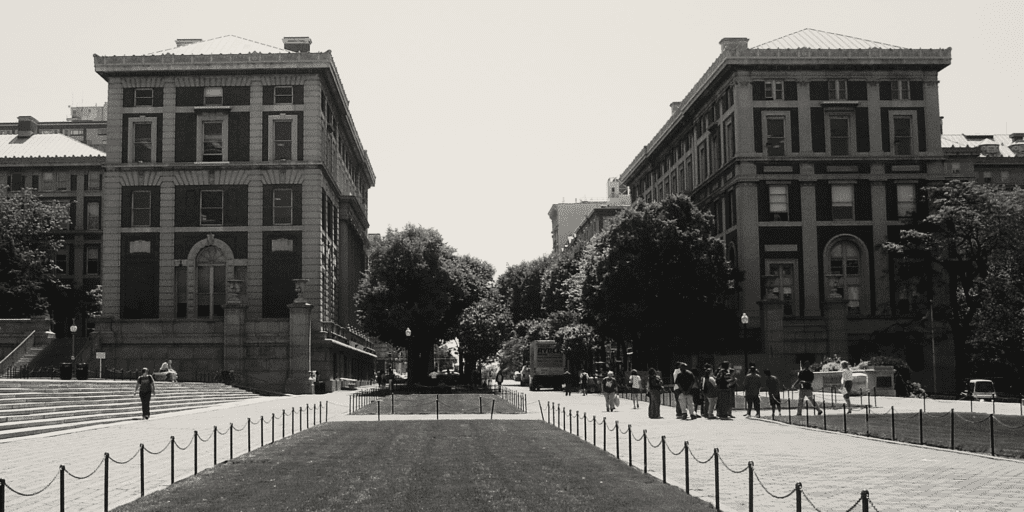
In November 2023, FairVote, along with CSSW Social Votes, the Latino Leadership Institute, and the National Association of Social Workers (NASW) – New York City Chapter, hosted a thought-provoking event at the Columbia University School of Social Work centered around ranked choice voting (RCV). This event explored RCV and its potential to tackle systemic issues in politics, campaigns, and coalition-building, as well as RCV’s intersection with race, ethnicity, and social work.
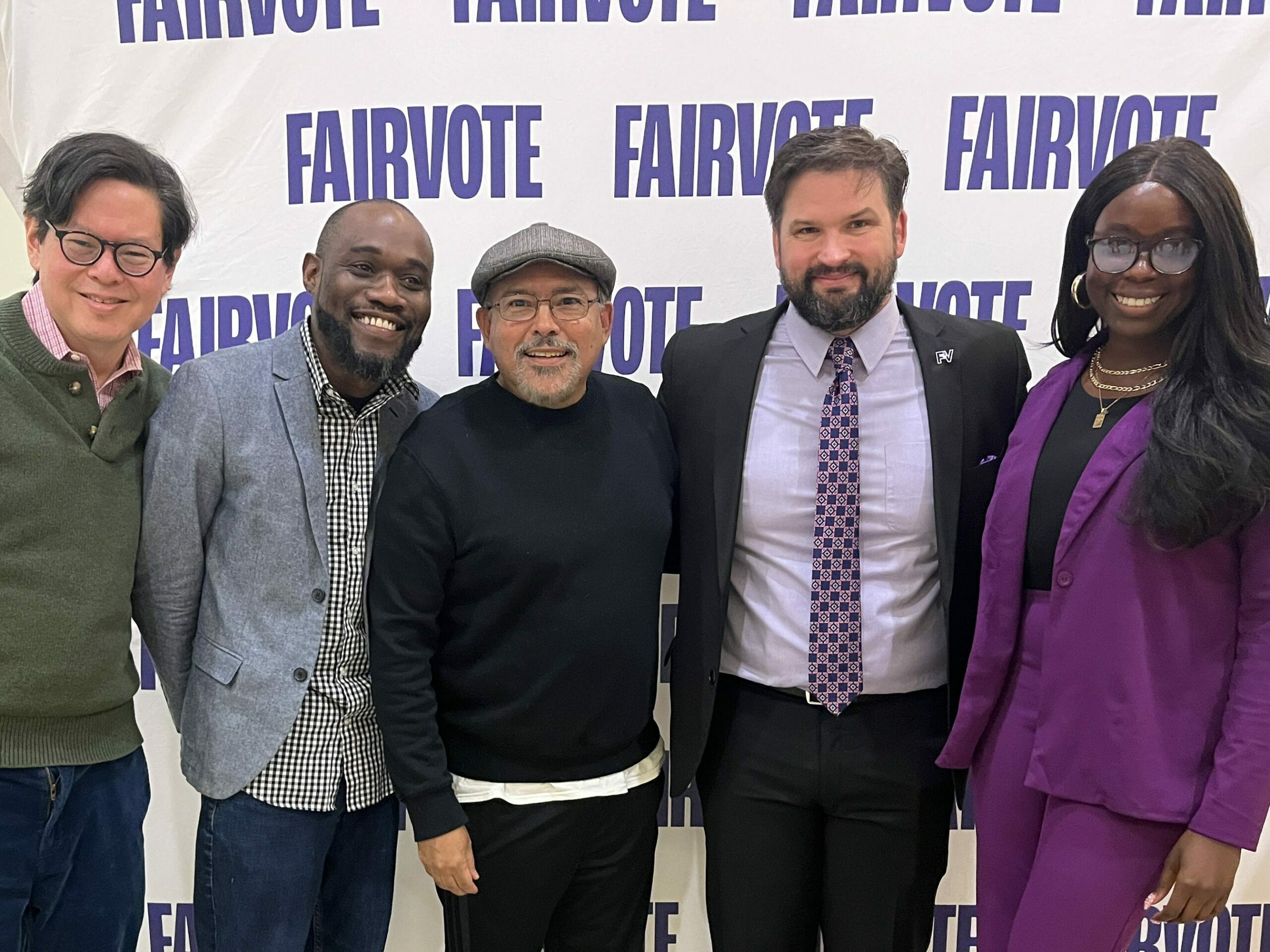
The panel featured four distinguished individuals, who each brought a unique perspective to the discussion:
- Victoria Pelletier: national partnerships manager at RepresentWomen and Portland, Maine city councilor
- Mike Griffin: organizer and advisor to FairVote Minnesota
- Michael Li: senior counsel for the Brennan Center’s Democracy Program, where his work focuses on redistricting, voting rights, and elections
- Jaime A. Estades: founder of the Latino Leadership Institute and Adjunct Professor at the Columbia School of Social Work
Key takeaways from the event include:
- RCV promotes the representation of historically underrepresented groups.
- RCV gives voters a backup choice and mitigates vote-splitting.
- RCV incentivizes positive campaigning.
- Educating voters about RCV and its benefits is essential for its widespread adoption and success.
- Continued research and advocacy are necessary to ensure equitable access to RCV and address any implementation challenges.
Columbia University event highlights
The panel began with a short “RCV 101,” highlighting RCV’s potential to foster more representative and inclusive elections. RCV allows voters to rank candidates in order of preference, and ensures that winners have broad support within their constituencies.
The conversation swiftly transitioned to the systemic challenges plaguing modern politics, including vote-splitting, gerrymandering, and negative campaigning. Panelists discussed how RCV can help remedy those – promoting greater diversity among elected officials and mitigating the divisive nature of single-choice elections.
One central theme of the event was the intersection of RCV with race and ethnicity. Panelists discussed how RCV can lift up the voices of underrepresented communities and empowers candidates from diverse backgrounds. By eliminating the “spoiler effect” and encouraging coalition-building, RCV creates pathways for candidates who better represent the diversity of modern societies.
Mike Griffin shared insights from Minneapolis and St. Paul, which have successfully implemented RCV. He underscored the RCV’s positive impact on representation for communities of color – particularly that candidates of color no longer need to “wait their turn” to run for office when another candidate of the same race or ethnicity is running. For example, in 2023, St. Paul elected an all-women city council for the first time in its history, and the council is majority women of color. Similarly, in 2021, Minneapolis elected its first majority people-of-color city council.
Jasmine Dearman, CSSW Social Work Votes leader and NASW New York City Student Representative, had this to say about the event:
One of the biggest issues facing our democracy today is that our system isn’t quick to respond to the rapidly changing demographics and needs of our society. RCV offers a practical pathway to creating more responsive governance, and social workers can be an asset in the efforts to organize and push for this change in our democratic system.
The Columbia University event served as a catalyst for meaningful dialogue on the future of democracy with students and professors. Through informed discussions and diverse perspectives, participants gained valuable insights into the role RCV can play in addressing systemic issues in politics while advancing racial and ethnic equity. As communities across the nation explore electoral reform, events like these provide opportunities to chart a path toward a more inclusive and representative democracy.