Howard University Event Explores Ranked Choice Voting and Voting Rights
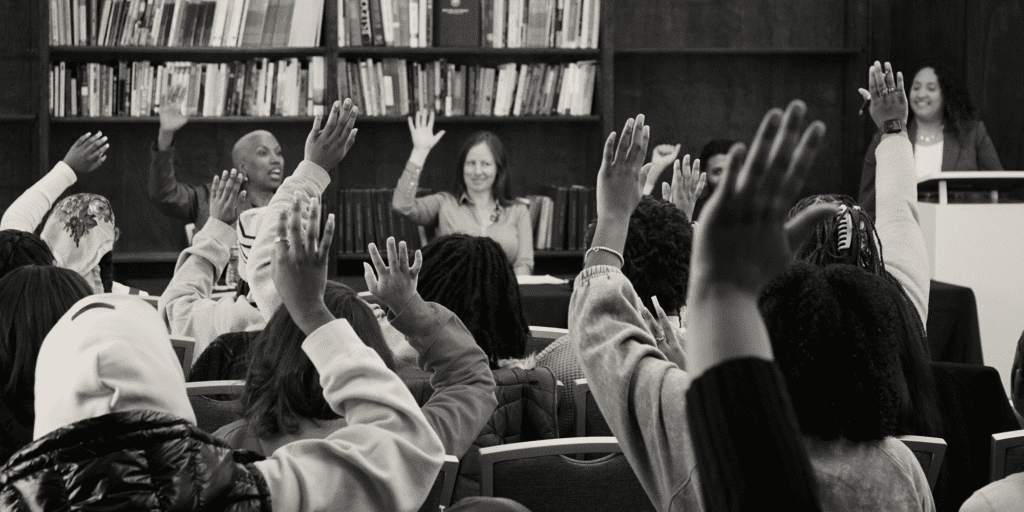
On a crisp Tuesday afternoon, Howard University students, faculty, and community members gathered for an insightful panel about ranked choice voting (RCV). Hosted by FairVote and Black Voters Matter, the event delved into the potential of RCV to improve elections, particularly within the context of voting rights and representation for underserved communities.
Now is an especially potent time to discuss RCV at Howard, since the Make All Votes Count DC campaign is actively gathering signatures to put RCV on the ballot in the nation’s capital (home to Howard). In addition to implementing RCV, Initiative 83 would allow independents to vote in the primary of their choice.
Panelists included:
- Deb Otis, director of policy and research at FairVote
- Lisa D.T. Rice, Unite America board member and proposer of Initiative 83
- Vinay Orekondy, coalitions director and national organizer for Rank the Vote
- Rhyane Wagner, national policy manager at Black Voters Matter
Event highlights
Each panelist brought a unique perspective to the table, offering insight into the intersection of voting rights, representation, and systemic change.
Deb Otis kicked off the conversation by discussing how RCV works. She emphasized how RCV empowers voters to express their preferences fully, fostering a more representative political landscape. Additionally, Otis underscored how RCV can decrease barriers to entry for women and candidates of color:
Sometimes if you have, say, a Black woman candidate in the race already, if there’s another Black woman candidate who wants to run, she might be told it’s not the right time. ‘You might just split votes because you’re going to appeal to the same community’ . . . With ranked choice voting, that dynamic is gone.
Wagner focused on the history of voter suppression and possible solutions. With voter suppression bills popping up around the nation, she affirmed that ranked choice voting – coupled with other voting rights advancements – can help open up the democratic process to those who have been disenfranchised:
I think ranked choice voting will help us move beyond those simplistic narratives . . . Ranked choice voting will open up the playing field for more quality candidates. It’s not just for black voters, it’s for other marginalized communities where there’s this silly narrative around the lesser of two evils. You don’t have to worry about that when you have options in terms of who to select to represent you.
Rice, an outspoken political independent, spoke about Alaska Congresswoman Mary Peltola as an example of the kind of candidate who can thrive with ranked choice voting:
That is such a clear example of how ranked choice voting works for the person who is told it’s not your turn. And she didn’t believe it and she went out and campaigned. She is one of my heroes because she just did not accept it’s not my turn.
Orekondy – a grassroots organizer leading the Make All Votes Count campaign in Washington, DC – shared insights into effectively organizing for RCV. He emphasized the importance of community engagement, education, and mobilization in ensuring the success of outreach efforts:
Our goal in this campaign is to talk to every voter . . . Every single one of you is a network, between your friends, your family, where you work; and their friends, their family, where they work. So, what we want to do is if we want to aggressively talk to every single person you know . . . We’d love to have you involved in making this happen.
The event also served as an opportunity for students and panelists to connect. Attendees gained a deeper understanding of the role they could play in advancing electoral reform in their own communities, and how to promote equitable representation in the District.
Nathan Roseboro, student organizer for Make All Votes Count DC, said this about the event:
Thank you . . . for taking the time to educate Howard University students . . . on how ranked choice voting plays a pivotal role in voting rights. Since the idea is new to most students, I can’t emphasize enough how impactful it is for you to host and participate in these educational events, especially for HBCUs!
Overall, the panel sparked meaningful conversations about the potential of ranked choice voting and its role in advancing voting rights. As we look toward the future, events like these can serve as catalysts for progress, reminding us of the power we hold to shape a more inclusive and equitable democracy for all.