What to know about the Supreme Court ruling in Louisiana v. Callais
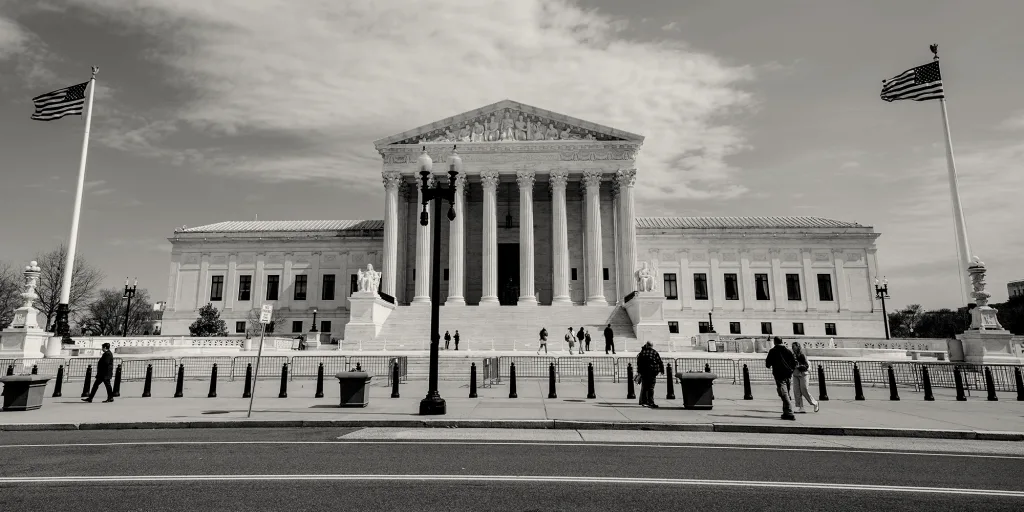
On April 29, the Supreme Court issued a ruling in Louisiana v. Callais that dismantles landmark protections of the Voting Rights Act (VRA) of 1965 and undermines bedrock principles of American democracy. The Court struck down a Louisiana congressional map that included two majority-Black districts – and imposed a new test for drawing districts that makes it nearly impossible for voters of color to win fair representation.
The Court’s ruling guts enforcement of Section 2 of the VRA, which has protected voters of color from racial discrimination for the past 61 years and represents the greatest achievement of the Civil Rights Movement. The ruling will let states silence the voices of voters of color – by wiping away districts that provide them an equal opportunity to participate in the political process, and to elect candidates of their choice.
FairVote is working alongside all of our partners in building a democracy in which voters of every race and ethnicity have equal voice and representation.
Read FairVote’s statement here, and see statements and resources from leaders in the voting rights community below.
Section 2 was rightly named the crown jewel of the Civil Rights Movement by earlier compositions of this Court. Today, however, the Roberts Court has allowed discrimination to run rampant as long as state mapmakers cite even the most tenuous justification. This is a setback for our country and our constitution which grants Congress the authority to address the scourge of racial discrimination in voting. We will demand new legislation to protect voters and continue to fight to defend and advance civil rights for all people and to protect our democracy as our institutions continue to fail us. This fight will continue in the courts, in statehouses, in the streets and most importantly at the ballot box until the promise of our multiracial democracy is realized.
– Janai Nelson, president and director-counsel of the Legal Defense Fund (read full statement here)
This decision is a profound betrayal of the legacy of the civil rights movement. By gutting Section 2 of the Voting Rights Act, the Court has weakened the primary legal tool that voters of color rely on to challenge discriminatory maps and election systems. In practical terms, this means that even where racial discrimination in voting is clear and ongoing, communities will be left without the most significant weapon they have to stop states from drawing districts that dilute their political power. Representation for Black, Latino, Native, and other voters of color will increasingly depend on the goodwill of legislatures rather than enforceable law, allowing discriminatory systems to persist unchecked and making meaningful political representation far harder to achieve.
– Sophia Lin Lakin, director of the ACLU’s Voting Rights Project (read full statement here)
By stripping away Section 2 protections, the court leaves communities here vulnerable to maps that dilute their political power and undermine the hard-won promise of a multiracial democracy. But on the ground in Louisiana, we remain committed to protecting every voter’s right to participate and ensuring that our communities are not silenced.
– Alanah Odoms, executive director of the ACLU of Louisiana (read full statement here)
Additional resources on Section 2 and the Louisiana v. Callais decision:
- Read the full text of the court’s ruling (along with concurring and dissenting opinions) here.
- Legal Defense Fund: “Supreme Court Strikes Down Louisiana Map and Destroys Key Voting Rights Act Provision”
- Leadership Conference on Civil and Human Rights: “Civil Rights Leaders Respond to Supreme Court Decision in Louisiana v. Callais”