University of Michigan and Wayne State University panels on election reform
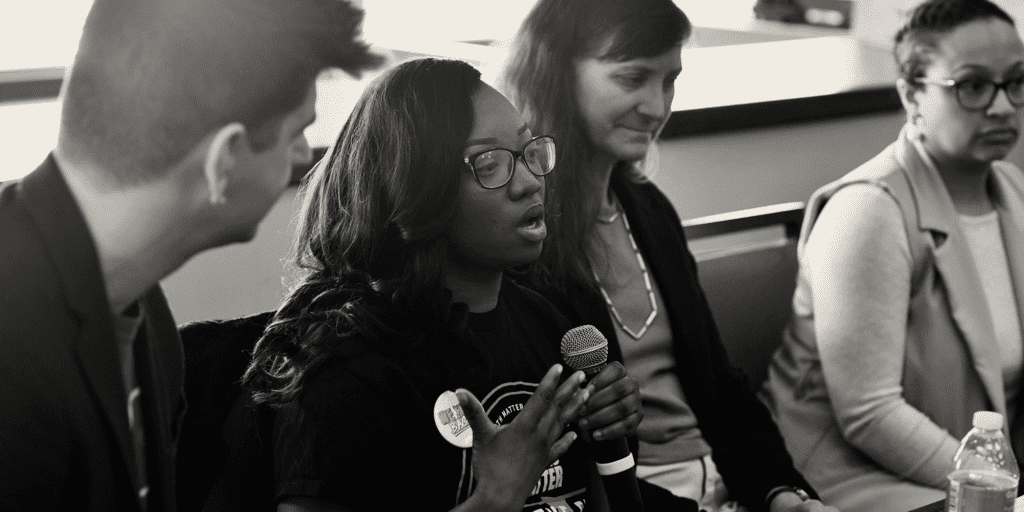
On March 28, the University of Michigan and Wayne State University hosted engaging events aimed at fostering a dialogue on election reform. The events, organized by FairVote, Black Voters Matter, and Rank MI Vote, highlighted ranked choice voting (RCV) and proportional representation as important ways to improve our elections. The panels follow wins for RCV ballot measures in three Michigan cities, and come alongside the looming possibility of a presidential “spoiler” affecting the state’s critical electoral votes in November.
Panelists included:
- Rhyane Wagner, national policy manager at Black Voters Matter
- Diane Silver, advocacy manager at FairVote
- A’Mira Williams, community outreach coordinator for Black Youth Vote! Kalamazoo
- Pat Zabawa, member of the Rank MI Vote Board of Directors
University of Michigan event
In an event at the University of Michigan, panelists expressed concern over “vote-splitting” in Michigan elections. Zabawa highlighted a recent election in Michigan’s 13th Congressional District – where a majority-Black district centered on Detroit elected a non-Black representative for the first time since 1955 – as an example of the problem, and of how RCV can help:
For the 13th congressional district, it is a majority Black district, but the [eight] Black candidates split the vote so a non-Black candidate won. That’s a real-life example of where ranked choice voting would allow people in that district to feel represented in Congress whereas right now they don’t.
Silver added that ranked choice voting holds elected officials accountable. Candidates must appeal to a wide swath of voters, not just a narrow base; winners could lose those voters’ support in the next election if they don’t follow through with their promises. Ranked choice voting also makes it easier for independent and third-party candidates to run, which provides more choices for “uncommitted voters” – who make up a significant chunk of the electorate in Michigan.
The conversation soon turned to ranked choice voting with multi-member districts – the gold standard for electing legislators. Wagner cited gerrymandered maps from North Carolina as an example of where the reform could make a difference:
The maps that came out of North Carolina looked awful. The courts split up much of the Black parts of the state where HBCUs were. We have to radically reimagine how we see democracy and introduce tools like proportional representation… we still have to have those fights around making sure our communities don’t get broken up.
Wayne State University event
Another event that day at Wayne State University was not only informative, but also served as a call to action for voters and policymakers.
Rhyane Wagner delivered a powerful address on the alarming trend of voter suppression targeting Black communities. She discussed notable laws and tactics employed to disenfranchise Black voters, ranging from burdensome voter ID requirements to restrictive voting hours.
Her impassioned plea for safeguarding voting rights resonated deeply with attendees, sparking a renewed sense of urgency to combat systemic barriers to democratic participation. Wagner said ranked choice voting, coupled with other voting reforms, offers a pathway to a more inclusive democracy.
Williams brought a grassroots perspective to the discussion, highlighting the importance of community engagement in the RCV movement. Williams stressed how, during last year’s successful RCV campaign in Kalamazoo, text-banking, social media, and canvassing on campuses were vital for reaching and activating young voters. She noted that young people were interested in new solutions to old problems when it came to voting – with RCV currently the most popular reform based on her conversations with young voters in Michigan.
Overall, the panels sparked meaningful conversations about the benefits of ranked choice voting and its role in advancing voting rights. As we look toward the future, events like these can serve as catalysts for progress, reminding us of the power we hold to shape a more inclusive and equitable democracy for all.
For more info on how to support the RCV movement in Michigan, visit Rank MI Vote today!