Ranked choice voting in New Mexico
Read the full report or download a PDF version below.
Introduction
Since 2008, two of New Mexico’s largest cities have improved their elections with ranked choice voting (RCV) – including the state capital of Santa Fe, where RCV replaced plurality; and Las Cruces, where RCV replaced delayed runoff elections. Other cities — including Albuquerque, the state’s largest city — are considering adopting RCV too.
This report examines how RCV is working in New Mexico so far, and where it could be adopted in the future.
The path to reform
Santa Fe adopted RCV by ballot measure in 2008, with 65% of voters in favor. Voters first used RCV in 2018, after the city acquired compatible equipment certified in the state. The city launched the website votedifferentsantafe.com as part of its voter education campaign, and was applauded by the Ranked Choice Voting Resource Center for “putting on a smooth, successful election” in which “voters understood their ballots and… knew they would be counted accurately.”
Las Cruces adopted RCV by unanimous City Council vote in 2018. Election administrators noted that by replacing runoffs, RCV would simplify the election calendar and save taxpayers an estimated $80,000 – $100,000 per race. Local leaders also viewed RCV as a way to increase participation in elections — runoffs typically have low turnout compared to the general election.
RCV ensures winners have broad support
Since 2018, Santa Fe and Las Cruces have held 20 RCV contests — 10 in each city. Both cities have elected two different mayors and numerous councilors using this system.
Overall, the RCV races have been characterized by high turnout, voters ranking multiple candidates, and strong consensus for winners.
Highlights from the 20 contests include:
- An average of 72% of voters ranked the winner in their top three choices (of the races for which we have complete ranking data), indicating strong support for winners even in highly competitive races.
- The four mayors elected with RCV each won at least one of their elections with less than 50% of voters’ first choices, and earned a majority of votes in the RCV count. They were each able to reach beyond their base and earn second- and third-choice support from voters.
- Five out of 15 city council races elected a first-round majority winner, while the other 10 needed multiple rounds.
- Every first-choice leader went on to win. Nationally, 6% of RCV elections have a come-from-behind winner, so New Mexico cities are an outlier in that there have been no come-from-behind victories yet.
Voters want to keep using RCV
Santa Fe voters immediately expressed support for RCV and embraced ranking candidates. A 2018 exit poll found that 94% of Santa Fe voters were satisfied with their voting experience, and 71% wanted to continue using RCV for future elections. Additionally, voters picked up on candidates’ positive campaign styles; three-quarters of voters had a candidate ask to be their second or third choice, and 69% reported that candidates spent “very little time” or “none of the time” criticizing their opponents.
2025 polling in Las Cruces and Santa Fe found that most voters find RCV simple and want to keep using it. 86% of voters said it is important for winners to earn a majority of the vote.
Spotlight: Women win with RCV
Santa Fe elected a majority-women City Council in its first RCV election. Las Cruces did too, and elected an all-women Council in 2021. This matches evidence from around the country — including in cities like New York City, Salt Lake City, Oakland, and Minnesota’s Twin Cities — that RCV can help improve representation for women. Women’s voices on these city councils are already making a difference.

Maybe this is going to be a space where leaders are more willing to listen to one another [and] to consider things outside of the traditional power hierarchy.
Las Cruces City Councilor Becki Graham

It makes me think about how representation matters.
Las Cruces City Councilor Becky Corran

[RCV] trains all of us to come out of this all-or-nothing negative cycle that we seem to be stuck in and start looking for common ground and collaboration.
Las Cruces City Councilor Johana Bencomo
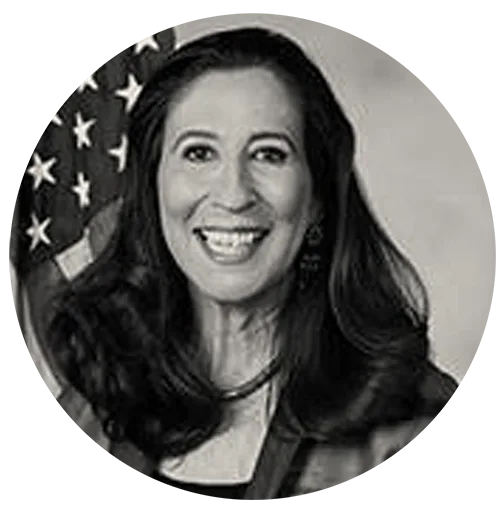
Ranked choice elections make a lot of sense. It is a much better way of doing elections.
U.S. Representative Teresa Leger Fernandez
Albuquerque’s elections show more NM cities could benefit from RCV
Albuquerque, New Mexico’s largest city, may only be one hour from Santa Fe, but its elections are lagging far behind. Albuquerque voters headed back to the polls in December 2025 — less than a month after the general election – to vote in runoffs for mayor and two City Council seats. Albuquerque has a history of low-turnout runoffs, particularly for City Council contests when the mayoral race is not on the ballot.
Incumbent Mayor Tim Keller earned 36% of the vote on Election Day. Instead of conducting an “instant runoff” to determine the majority winner, Albuquerque voters had to vote a second time. Not only is this inconvenient for voters, but it cost $1.8 million.
In a 2025 poll, Albuquerque voters supported RCV by a three-to-one margin. Most voters indicated they would prefer to elect city offices in a single election than in two rounds.
With RCV, Albuquerque has the chance to improve its elections for voters, candidates, and city officials.
Common Cause New Mexico and NM Voters First are leading an effort to bring RCV to the Duke City.
Conclusion
With eight years of experience using RCV, Santa Fe and Las Cruces are examples of how cities can improve their elections for votes, candidates, and city officials alike. Both Santa Fe and Las Cruces have improved diversity in elected office, ushered in more positive campaigns, and seen strong support from voters for the reform. Albuquerque and other cities throughout the Land of Enchantment could see similar benefits from RCV.
About the Authors
This report was authored by Common Cause New Mexico, New Mexico Voters First, and FairVote.