Ranked choice voting protects military and overseas voters
This report describes the challenges military and overseas voters face when participating in runoff elections, and how ranked choice ballots are a proven solution to help them exercise their right to vote. It is co-authored by FairVote, Veterans for All Voters, and We The Veterans.
Executive summary
- Runoffs can disenfranchise military and overseas voters. Also known as UOCAVA voters (per the Uniformed and Overseas Citizens Absentee Voting Act), military and overseas voters face unique barriers to participating in runoff elections. Mail delays and sudden reassignments make it difficult to return one ballot on time, let alone two.
- Ranked choice ballots offer a proven solution. Six states provide UOCAVA voters with a ranked ballot at the same time as their initial election ballot. If a runoff election occurs, the voter’s ballot counts for whichever runoff candidate is ranked highest. This enables more military and overseas voters to participate in the runoff at a reduced cost for taxpayers.
- This policy can be expanded to protect over 113,000 more voters. Over 113,000 additional UOCAVA voters — including more than 40,000 service members — are registered in states with runoffs that do not provide UOCAVA voters with ranked ballots.
- Ranked choice voting (RCV), also known as instant runoff voting, can eliminate the need for runoff elections entirely.
Runoff elections leave UOCAVA voters behind
Runoff elections are designed to identify candidates with majority support. If no candidate reaches a certain threshold (typically 50% of the vote) in a given election, the top-two vote-getters compete in a delayed runoff election to determine the winner. Currently, ten U.S. states hold runoffs for congressional elections.
Alabama, Arkansas, Georgia, Mississippi, North Carolina, Oklahoma, South Carolina, South Dakota, and Texas use runoffs for primary elections. Georgia, Mississippi, and Louisiana use runoffs for general elections.
Runoffs are far from representative, however. Turnout almost always declines, meaning a smaller and potentially less representative group of voters determines the result. Voter fatigue, combined with practical barriers like mail delays, contributes to this dropoff.
Nowhere are these challenges more pronounced than for members of our armed forces. Active-duty military members, as well as other overseas voters, often struggle to participate in runoff elections due to the need to cast a second ballot. Multiple mailings increase the risk that a ballot is not counted due to delivery delays. Deployments and reassignments can occur on short notice, complicating the process of receiving and returning one ballot, let alone two.
Voting from a war zone is extraordinarily complicated. There is no normal mail service. I voted from both Iraq and Afghanistan, on paper ballots delivered to me by helicopter amidst kill and capture missions… For those of us who live in states with runoff elections, it’s all but impossible to have our voices heard. It means receiving and returning mail ballots from combat duty two times in a few short weeks.
— Garrett Cathcart, U.S. Army combat veteran and Executive Director of + More Perfect Union
This helps explain why the voter participation rate is much lower among active duty military members than other voters. In the 2020 election, 47% of military personnel voted, compared to 67% of the general population. According to a 2020 survey, 21% of military members wanted to vote but were unable to complete the process. Of this group, 54% reported difficulty requesting an absentee ballot, and 43% reported that their absentee ballot did not arrive at all.
This disparity persisted in the 2022 midterms; just 23% of military members voted, compared to 52% of the general electorate.
Per the Military and Overseas Voter Empowerment (MOVE) Act of 2009 — which expanded the protections granted by the Uniformed Overseas Citizens Absentee Voting Act (UOCAVA) of 1986 — states must provide military and overseas voters with ballots 45 days prior to any federal election. Some states with runoff elections chose to delay their runoff elections in order to send a second ballot to military and overseas voters. However, this has a drawback — the more time between the initial election and the runoff, the greater the turnout decline tends to be among all voters.
Despite the MOVE Act, military and overseas voters continue to point to tight ballot turnaround times as an obstacle to voting. There is often barely (or not enough) time for election officials to count first-round votes, certify the results, and print and mail absentee ballots; and for military and overseas voters to request runoff ballots, fill them out, and return them in time to be counted. When their ballots arrive too late — or don’t arrive at all — these voters are effectively disenfranchised and excluded from the political process. In 2020, 2022, and 2024, the most common reason that UOCAVA voters had their ballots rejected was that they missed the return deadline.
Ranked choice ballots are an innovative solution
Ranked choice ballots provide a legal and practical solution to this issue. In fact, the use of ranked ballots for overseas voters has received pre-clearance from the U.S. Department of Justice under Section 5 of the Voting Rights Act.
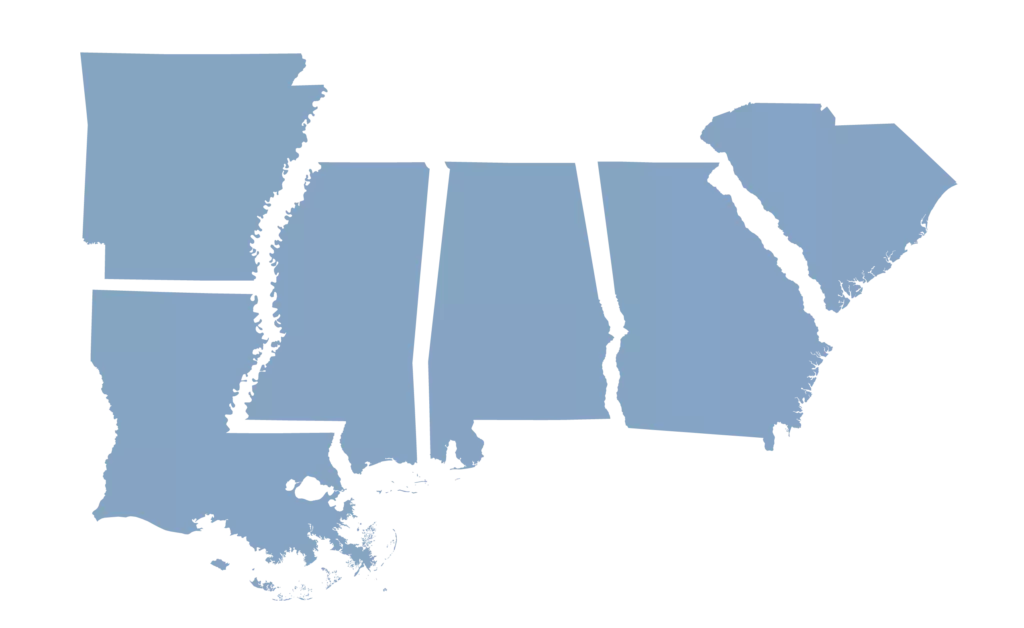
Six states — Alabama, Arkansas, Georgia, Louisiana, Mississippi, and South Carolina — provide a ranked ballot to UOCAVA voters at the same time the voters receive their standard absentee ballot for the regular election. Both ballots list all of the candidates running. UOCAVA voters indicate their top choice on the standard ballot, and can then rank the candidates in order of preference on the ranked ballot. See a section from a sample ranked UOCAVA ballot below:
Both ballots are returned before the first election. If the election proceeds to a runoff, administrators open the ranked ballot, and the vote counts for whichever runoff candidate is ranked highest.
This way, military and overseas voters receive everything they need to participate in just one mailing. This minimizes the likelihood of delivery delays, ensuring ballots arrive in time to be counted. This also provides flexibility for service members whose location may change on short notice.
When states use ranked ballots, taxpayers save on postage and other administrative costs. The practice also helps states avoid the burden of changing their election dates to accommodate the 45-day rule. This is a clear example of how states can solve challenges specific to their own elections.
How many UOCAVA voters do ranked ballots help?
As of November 2024, there are at least 160,000 registered UOCAVA voters in states that use runoffs for congressional elections. About 48,000 are registered in states where UOCAVA voters can use ranked ballots for runoff elections, meaning 48,000 voters can benefit from this policy. This includes over 19,000 service members, and over 29,000 other overseas voters.1
How is it working in practice?
We consider it an unqualified success. We’ve heard nothing but good things from voters about it. In the past, UOCAVA voters had a very difficult time participating in runoffs due to the two-week turnaround time. In the June 2012 primary, 92.5% of UOCAVA primary voters also participated in the runoff [with ranked ballots]. That is exceptional and doesn’t take into account those voters who may not have had a runoff. The real participation rate could be closer to 100%.
— Chris Whitmire, director of public information of the South Carolina State Election Commission
RCV works. It’s simple and effective, and military members can count on it… There’s no need to spend weeks waiting for a second ballot to arrive overseas, and no fear that ballots might not make it home in time to count.
— Josh Daniels, former Marine combat veteran and former Utah County clerk
Options for expanding the use of ranked ballots
1. Send ranked choice ballots to all UOCAVA voters in runoff states, including in NC, OK, SD, and TX
North Carolina, Oklahoma, South Dakota, and Texas use runoffs for congressional elections, but do not send ranked choice ballots to UOCAVA voters. Instead, the over 113,000 UOCAVA voters registered in these states must receive, fill out, and return two separate ballots – increasing the risk that the runoff ballot will not be counted for reasons mentioned earlier. This means over 113,000 additional voters, including over 40,000 service members, stand to benefit from using ranked ballots in this context.2
States could enact this policy individually through their state legislatures, or it could be mandated federally. Congress could require all states that use runoffs for federal elections to send UOCAVA voters ranked ballots through a standalone bill, or through an amendment to the National Defense Authorization Act (NDAA). The NDAA is passed annually and sets the budget and priorities for the Department of Defense.
2. Send ranked choice ballots to all UOCAVA voters for local runoff elections
The 40,000 figure above does not include UOCAVA voters who are registered in jurisdictions that use runoff elections for local races. Local elections pose an even greater problem than federal elections for military and overseas voters. Because local elections are not covered by federal laws like the Uniformed and Overseas Citizen Absentee Voting Act (UOCAVA) that protect overseas voters, some local runoff elections occur just a few weeks after the first round. Cities like Chicago and Houston hold their runoffs about four or five weeks after the initial election. Charleston, South Carolina’s 2019 mayoral runoff was held just two weeks after the initial election. This makes it almost impossible for overseas voters to participate fully in their community’s democratic process.
Cities can implement ranked choice ballots for UOCAVA voters, as Springfield, IL did in 2007. In 2023, the Illinois state legislature formalized the practice by explicitly allowing municipalities to use ranked ballots for overseas voters.
3. Replace runoff elections with ranked choice voting
As demonstrated in Alabama, Arkansas, Georgia, Louisiana, Mississippi, and South Carolina, ranked ballots can capture voters’ backup choices in case no candidate wins a majority. With RCV, all voters rank the candidates in order of preference, and if no candidate wins a majority of votes, the runoff occurs instantly. This saves taxpayers the cost of holding a second election. For jurisdictions that already use runoffs, transitioning to RCV is a natural next step that would strengthen their commitment to majority rule.
Conclusion
Alberto Ramos, chief of staff at Veterans for All Voters and a former submarine officer, knows firsthand how complex voting can be while serving abroad. One of his secondary responsibilities was serving as the Voting Assistance Officer on multiple deployments, helping fellow sailors access ballots and understand their rights — even while conducting top-secret missions around the world.
At the bottom of the ocean, we found a way to make voting possible. We did everything in our power to make sure democracy reached every sailor and that they had the chance to cast a ballot. If we can pull that off from a submarine, there is no excuse for why service members should be shut out of runoff elections here at home. Ranked choice ballots are a simple fix to a serious problem, one that respects the service and sacrifice of those still in uniform.
— Alberto Ramos, chief of staff at Veterans for All Voters and a former submarine officer
Alberto’s experience reinforces the fact that military and overseas voters deserve a chance to participate in every election, including runoffs, without facing logistical barriers that make voting nearly impossible.
Using ranked choice ballots is a simple, proven solution that reduces those barriers — and protects the voting rights of military and overseas voters.
Footnotes
- These numbers are based on data from the U.S. Election Assistance Commission’s Election Administration and Voting Survey (EAVS) Comprehensive Report, available at: https://www.eac.gov/research-and-data/studies-and-reports. Our calculations are available at this link: https://docs.google.com/spreadsheets/d/1Dghcy1gNhJKTnsTd-J8X774S6paL8SmJTVYky-6XHu4/edit?gid=2132086325#gid=2132086325
- These numbers are based on data from the U.S. Election Assistance Commission’s Election Administration and Voting Survey (EAVS) Comprehensive Report, available at: https://www.eac.gov/research-and-data/studies-and-reports. Our calculations are available at this link: https://docs.google.com/spreadsheets/d/1Dghcy1gNhJKTnsTd-J8X774S6paL8SmJTVYky-6XHu4/edit?gid=2132086325#gid=2132086325