Currently, our elections deprive voters of meaningful choices, create increasingly toxic campaign cycles, advance candidates who lack broad support, and leave voters feeling like our voices are not heard. Ranked choice voting is the solution.

How does ranked choice voting work?
Ranked choice voting (RCV) makes our elections better by allowing voters to rank candidates in order of preference: first, second, third, and so forth. If your first choice doesn’t have a chance to win, your ballot counts for your next choice. RCV works in all types of elections and supports more representative outcomes.
Ranked choice voting means better choices, better campaigns, and better representation. Ask your members of Congress to support it here.
Join us today Join us today Join us today Join us in our missionJoin us today Join us today Join us today Join us today Join us today Join us today Join us today Join us today Join us today Join us today Join us today Join us today
What does ranked choice voting do?
Ranked choice voting promotes majority rule, gives voters more choices, and discourages negative campaigning. Read more about its benefits below.

Voters get more choice, and can vote their conscience
With RCV, voters don’t need to worry about “spoilers,” or feel forced to vote for the lesser of two evils.
Voters can simply rank candidates in order of preference. If their first choice doesn’t win, their vote automatically counts for their next choice instead. This frees voters from worrying about how others will vote and which candidates are more or less likely to win.
More candidates can run without fear of playing spoiler, or of splitting the vote with like-minded opponents.
Try ranked choice voting yourself here, or click through the infographic below to see how votes are counted in an RCV election.

Winners have majority support
Each vote is precious and should count to the full extent possible. RCV yields election outcomes that better represent voter preferences. Winners elected with RCV have majority support and truly represent their communities – meaning a stronger mandate to govern, or stronger nominees in primary elections.
Candidates who win a majority in primary elections go on to perform better in general elections.

Discourages negative campaigning
With RCV, candidates also compete for second-choice support from their opponents’ supporters, which lessens the incentive to run negative campaigns. In RCV contests, candidates do best when they reach out positively to as many voters as possible, including those supporting their opponents.
I door knocked a number of people who had signs up for my opponent…. ‘The conversation didn’t have to stop because they had already pledged to someone else.
Rebecca Noecker, Saint Paul City Councilmember
Now that I’m a sitting supervisor, having run [in an RCV election] has helped me quite a bit because I now have all of these alliances with people in my district who were not part of my natural coalition but now have my ear and vice versa. And I think that’s a good thing for governing.
Myrna Melgar, San Francisco Supervisor

Saves money
RCV is a faster, cheaper, and better alternative to expensive preliminary elections and runoffs. With RCV, jurisdictions reap the benefits of two rounds of voting in a single, more representative, higher-turnout election. This is why RCV is also known as “instant runoff voting.”

Increases participation
With RCV ballots, military and overseas voters can rank candidates on a single ballot. If a runoff occurs, or if candidates drop out of a presidential contest, the ranked ballot is counted for whichever candidate in the runoff is ranked highest.

Lowers the barrier to entry for women and candidates of color

Las Cruces, NM City Council. Las Cruces has used RCV since 2019.
RCV makes it easier for women and candidates of color to run for office and win. With RCV, candidates aren’t pressured to wait their turn, nor are they perceived as “spoilers.”
Research finds that candidates of color are more likely to win RCV elections, particularly in races featuring multiple candidates of color. Voters of color also tend to rank more candidates than White voters.
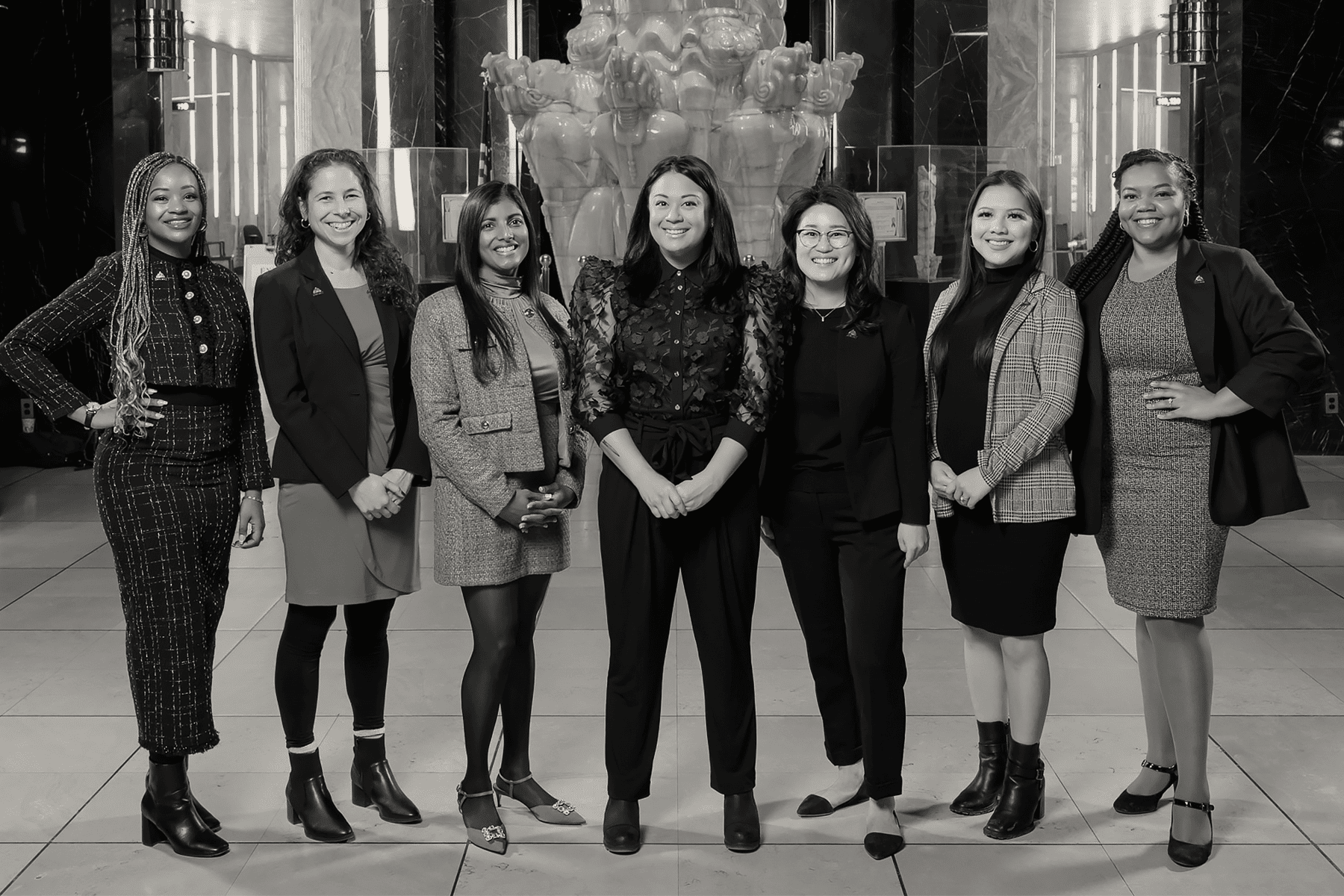
St. Paul City Council. St. Paul adopted RCV in 2009.
Where is ranked choice voting used?
Ranked choice voting is used in 49 American cities, counties, and states as of March 2026. Two states, Maine and Alaska, use RCV statewide. 36 cities and 3 counties use RCV for local elections. One state uses RCV for special elections, and six states and one city use RCV ballots for military and overseas voters in runoff elections.
For more information, visit our RCV Information page.