Ranked choice voting makes our elections better by allowing voters to rank candidates in order of preference. If your first choice doesn’t have a chance to win, your ballot counts for your next choice. More candidates can run without fear of “spoiling” the race, and voters have more power.
A new film, The Choice, follows two candidates who ran for Portland City Council in 2024 and shows how ranked choice voting impacted their campaigns. Watch The Choice below:
GET INVOLVED
Want to make our elections better? The best way is to join an existing election reform organization in your state. Find your state group on the map below, sign up for our newsletter, or use these quick resources for talking with friends and family about ranked choice voting.
BENEFITS OF RANKED CHOICE VOTING
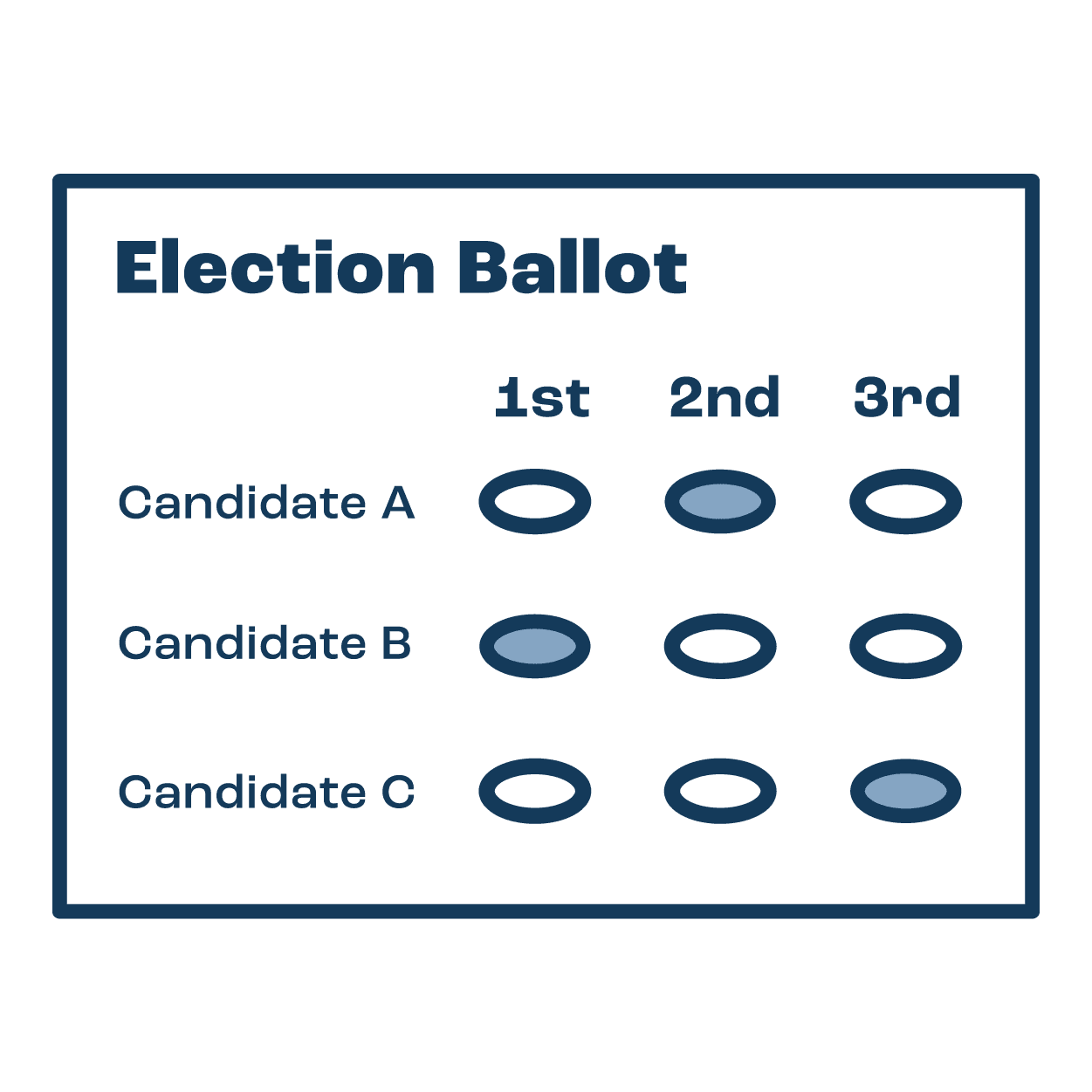
More voter choice
Voters can pick their favorite, and rank backup choices.

No more “spoilers”
If your 1st choice can’t win, your vote automatically counts for your next choice. No “wasted” votes or worrying about who is most likely to win.

Majority winners
Winners elected with RCV have majority support and a stronger mandate to lead.

Less negative campaigning
Candidates do best when they reach out to more voters, including to be their 2nd or 3rd choice.

Voters like ranked choice voting
Exit polls show that voters who use ranked choice voting like it and want to keep using it.

Saves money and increases participation
Cities can replace costly two-round elections with one higher-turnout election.
BENEFITS OF PROPORTIONAL REPRESENTATION

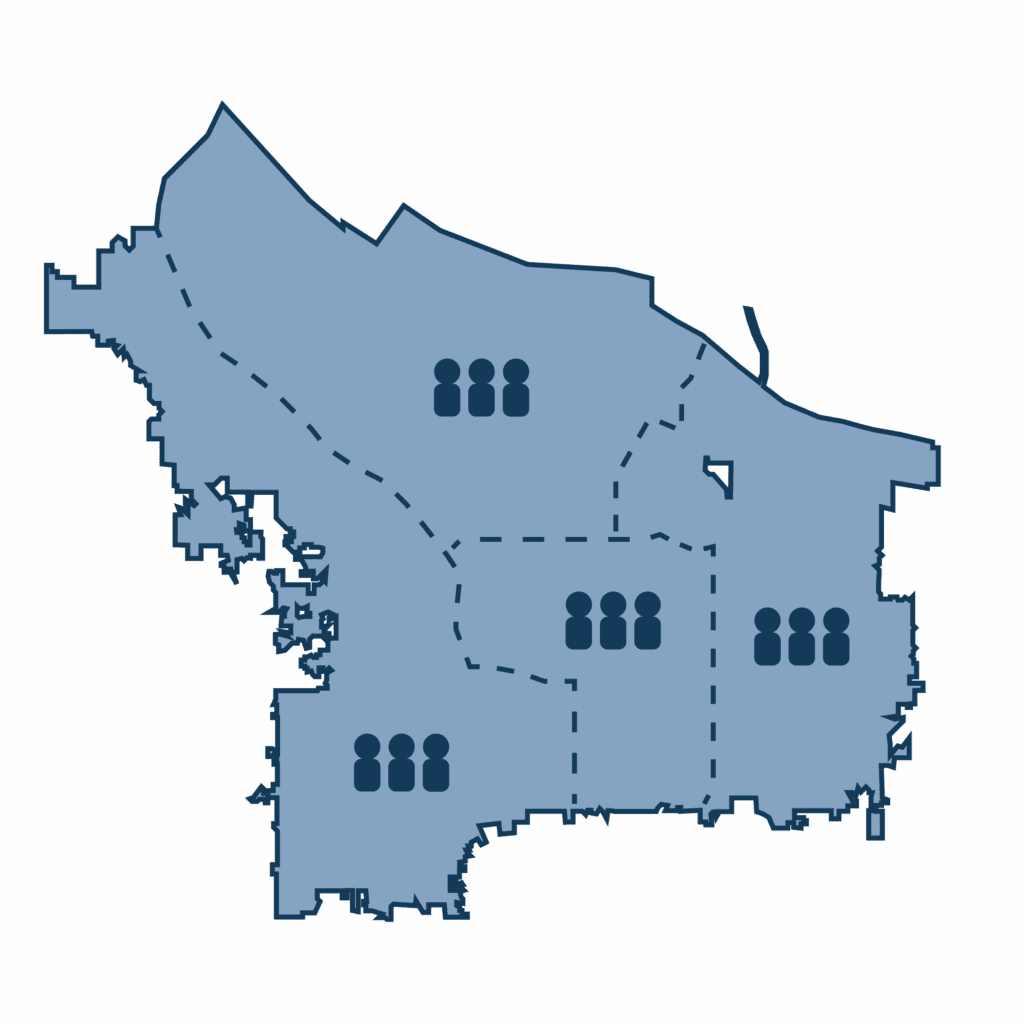
When combined with multi-member districts like in Portland, OR, ranked choice voting becomes a form of proportional representation.
Multiple legislators are elected per City Council district in proportion to the share of votes a group receives. For instance, if 60% of votes go to candidates who want to build more housing, then about 60% of seats go to pro-housing candidates.

Competition everywhere
Every district has competitive elections.
Most representative outcomes
Nearly all voters help elect a candidate they support. Everyone earns their fair share of representation.

No more gerrymandering
Politicians can no longer manipulate district lines. Voters pick their elected officials, instead of the other way around.

Good governance
The left, right, and center of every district win seats. Despite different ideologies, these representatives have an incentive to work with each other and solve problems for their district.