Americans are frustrated with the state of our democracy. 88% say our political system is broken, and 85% say most elected officials don’t care what people like them think.
The Ranked Choice Voting Act (H.R.6589 / S.3425) would strengthen democracy by instituting ranked choice voting (RCV) for all primary and general elections for the U.S. House and Senate.
Ask your members of Congress to support the Ranked Choice Voting Act using the button below.
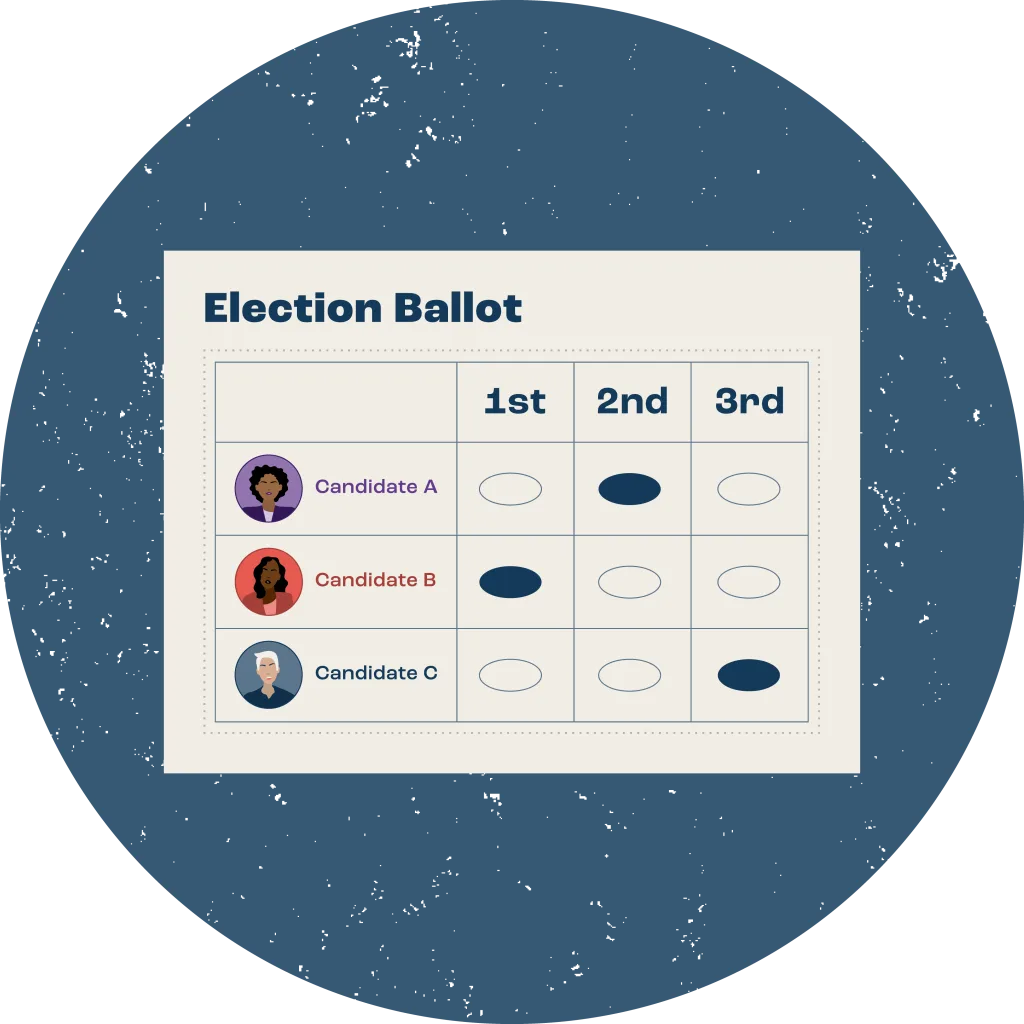
Benefits of the Ranked Choice Voting Act

More voter choice, no more “spoilers”
Voters can pick their favorite, and rank backup choices. If your 1st choice can’t win, your vote automatically counts for your next choice.

Turns down the temperature in politics
Candidates do best when they reach out to more voters, including voters who are ranking other candidates first.

Majority winners
Winners elected with RCV have majority support and a stronger mandate to lead.

Makes Congress work better
Elected officials benefit from working across the aisle once in office.

Voters like ranked choice voting
Exit polls show that voters who use ranked choice voting like it and want to keep using it.

Saves money and increases participation
RCV would replace congressional runoff elections, saving taxpayer dollars and letting more voters weigh in.
Ranked choice voting has a track record of success in congressional elections

Maine has used ranked choice voting for congressional primaries and general elections since 2018, and Alaska has used it for general elections since 2022. Democrats and Republicans alike have won RCV elections, including some of the most bipartisan members of Congress: Sen. Lisa Murkowski (R-AK), Sen. Susan Collins (R-ME), Rep. Jared Golden (D-ME), and Sen. Angus King (I-ME).
Military and overseas voters in six Southern states – Alabama, Arkansas, Georgia, Louisiana, Mississippi, and South Carolina – have long used ranked ballots to participate in congressional runoffs. As part of the Ranked Choice Voting Act, RCV would be expanded to all voters in the 10 states with congressional runoff elections, saving tens of millions of dollars and preventing the 41% median turnout drop of congressional runoffs.
Get involved
Want to make our elections better? The best way is to join an existing election reform organization in your state. Find your state group on the map below, and use these quick resources to talk with friends and family about ranked choice voting.